What can you make with a commercial cooking mixer?
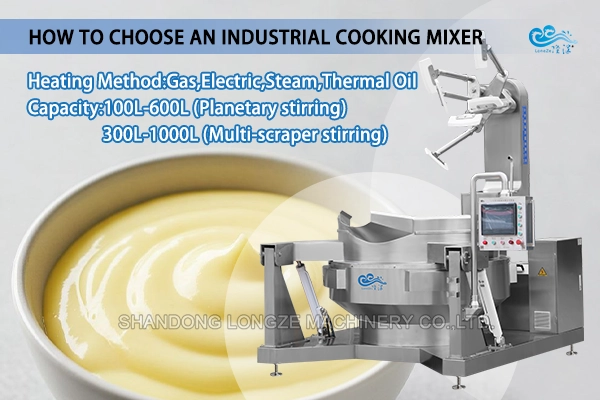
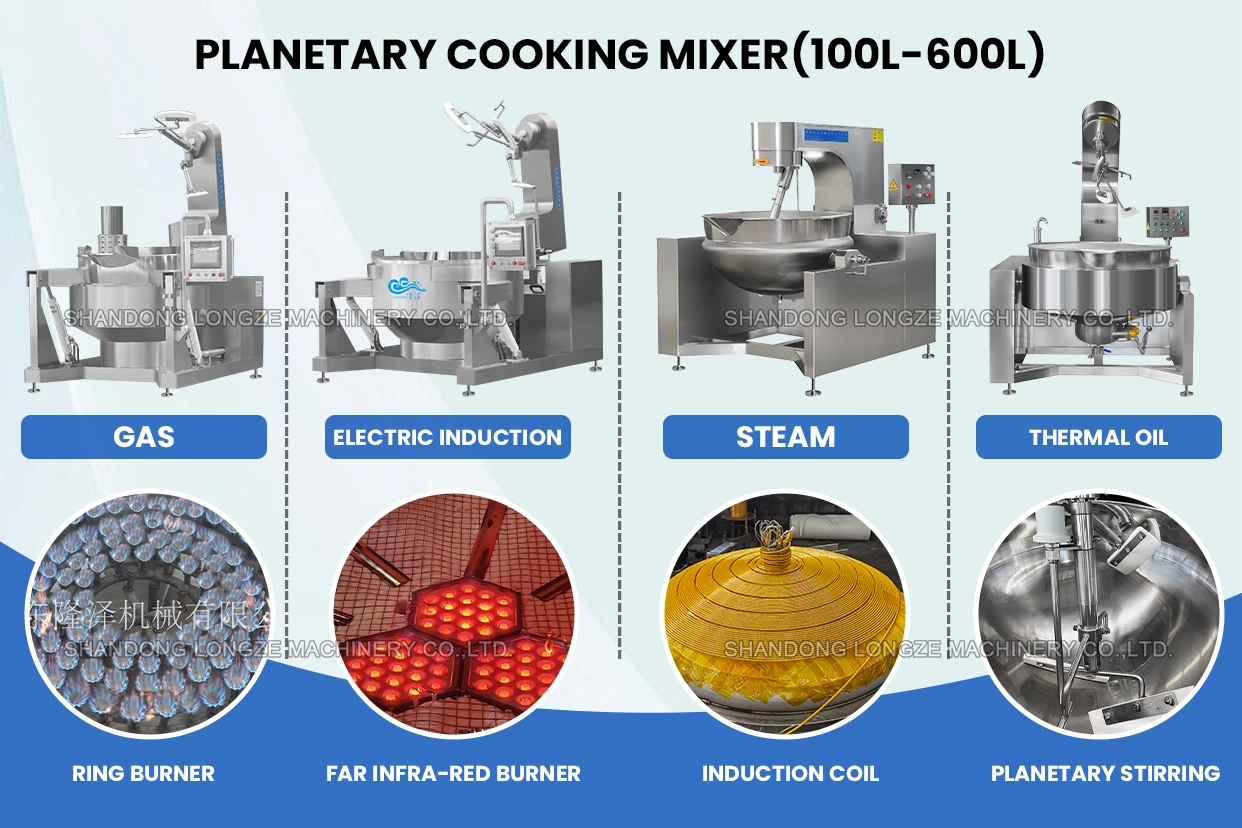
For food factories, central kitchens, restaurants, catering businesses and food manufacturers, a commercial cooking mixer can be used for much more than simple cooking. With the right heating and mixing configuration, the same type of food-processing equipment can be used for sauces, sugar products, fillings, powders, stir-fried foods, fried snacks, jams, meat products, soup bases and other prepared foods.
The key is the combination of heating and mechanical mixing.
When food needs to be cooked, stirred, concentrated, roasted, fried or kept moving during thermal processing, a cooking and mixing machine can reduce manual work and support more consistent batch production.
This makes commercial and industrial cooking mixers particularly useful for manufacturers that produce multiple food products or need to scale up from manual or small-batch processing.
In this guide, we look at 10 major food categories that can be processed with a commercial cooking mixer, together with typical products, processing requirements and equipment considerations.
Important: The exact products that can be processed, batch capacity, heating method, mixing system and processing results depend on the specific recipe, ingredients, viscosity, temperature, batch weight and machine configuration.
1. Sauce & Seasoning Production
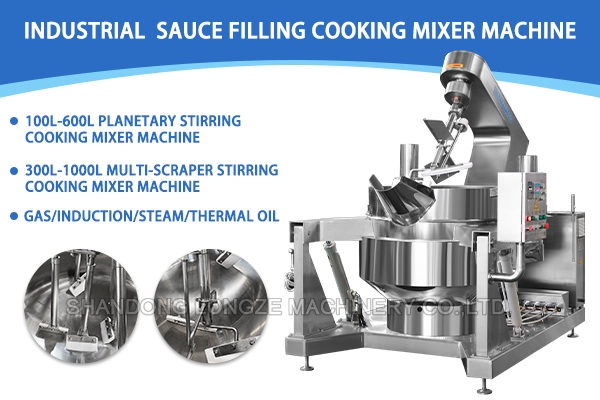
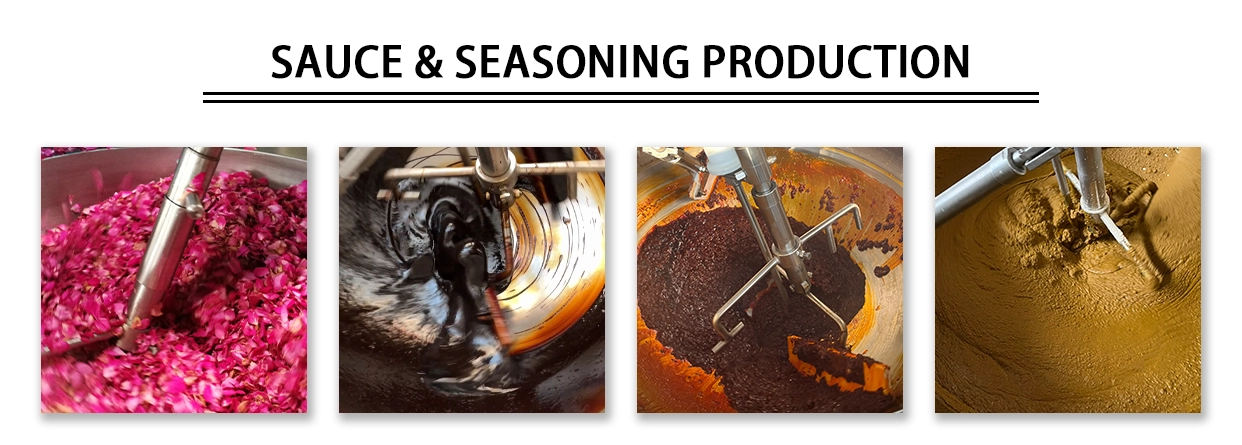
Sauce production is one of the most common applications for an industrial cooking mixer.
Commercial and industrial food manufacturers may produce many different types of sauces, pastes and seasonings in a heated mixing vessel.
Typical applications include:
- Chili sauce
- Korean chili paste
- Gochujang
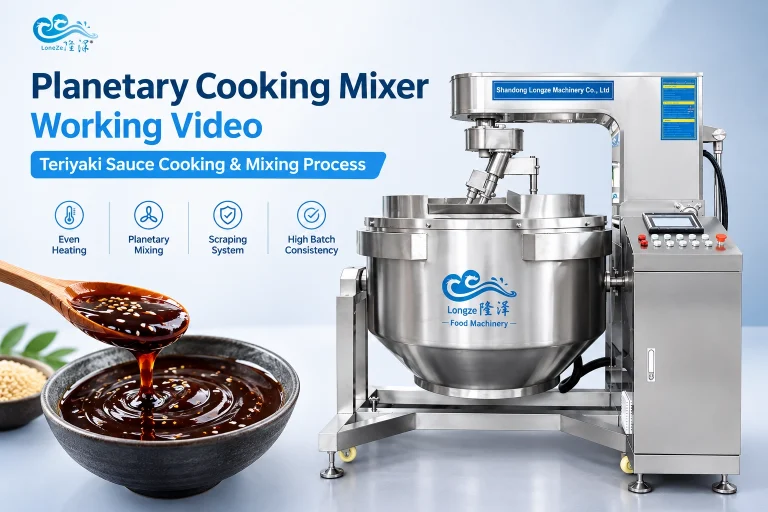
- Teriyaki sauce
- Curry sauce
- Tomato sauce
- BBQ sauce
- Seasoning sauce
- Cooking sauce
- Hotpot base
- Rose petal sauce
- Spice paste
- Nyonya paste
- Rempah
- Other customized sauces
Why is a cooking mixer suitable for sauce production?
Sauce manufacturing often involves several ingredients that need to be heated and mixed at the same time.
For example, a sauce may contain sugar, oil, water, spices, starch, vegetables or other ingredients. As cooking continues, the product can become thicker and more difficult to stir manually.
A planetary cooking mixer or other suitable industrial mixing system can continuously move the material while it is heated.
This helps support:
- More uniform ingredient distribution
- Continuous product movement
- Controlled cooking
- Reduced manual stirring
- More consistent batch processing
For thicker sauces and pastes, scraper systems can also help reduce product accumulation on the bottom and side walls of the cooking vessel.
2. Sugar Cooking & Confectionery Production
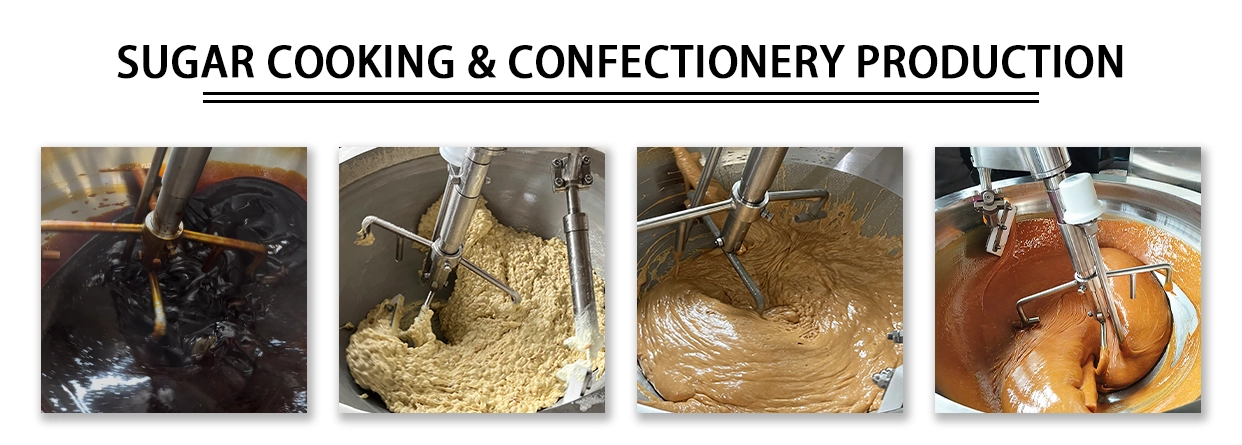
The second major application is sugar cooking and confectionery production.
Products based on sugar often require heating, evaporation and continuous mixing.
Typical products include:
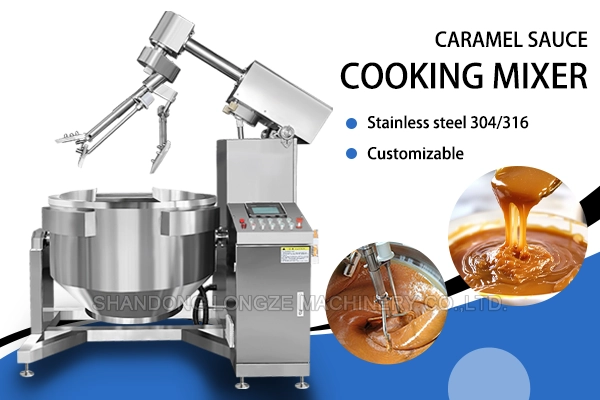
- Caramel sauce
- Caramel
- Toffee
- Toffee sauce
- Coconut sugar
- Sugar syrup
- Brown sugar syrup
- Candy syrup
- Maltose-based products
- Nougat
- Confectionery fillings
- Other sugar-based food products
Why does sugar cooking require effective mixing?
As water evaporates during cooking, the concentration and viscosity of a sugar-based product can increase significantly.
The material may become sticky and more difficult to handle.
A suitable industrial cooking mixer can continuously move the product during heating.
Depending on the product and machine configuration, scraper mixing can also help reduce material buildup on heated surfaces.
For this type of application, manufacturers should consider:
- Heating temperature
- Heating rate
- Product viscosity
- Sugar concentration
- Batch weight
- Mixing speed
- Scraper design
- Discharge method
3. Food Filling Production
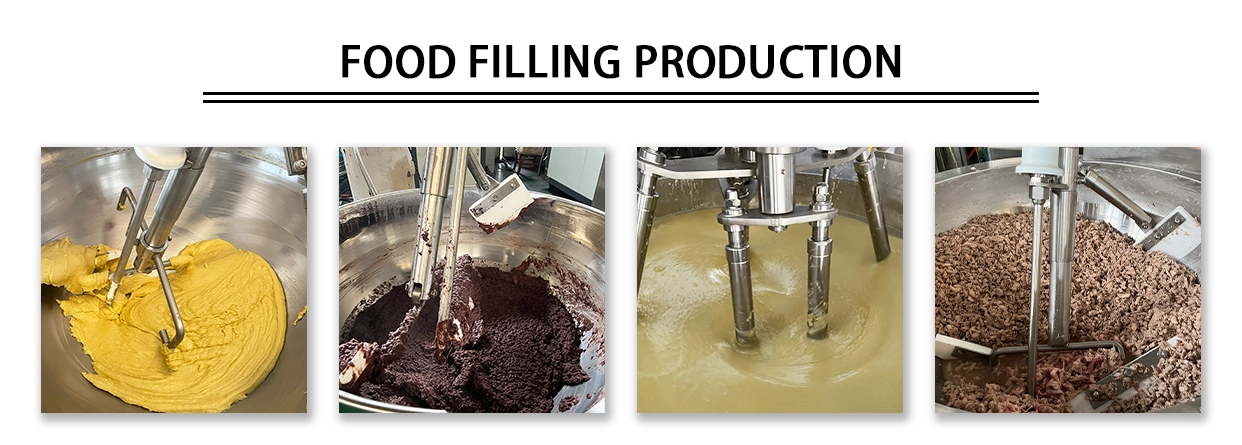
The third application is food filling production.
Food fillings can range from smooth pastes to thick mixtures containing meat, vegetables, coconut, nuts or other ingredients.
Typical applications include:
- Meat filling
- Red bean paste
- White bean paste
- Lotus seed paste
- Coconut filling
- Coconut paste
- Fruit filling
- Bakery filling
- Pastry filling
- Dessert filling
- Nut filling
- Savory filling
Why are cooking mixers used for food fillings?
Many fillings need to be heated while being continuously mixed.
As moisture is removed during cooking, the material can become thicker and more difficult to process.
A high-viscosity food mixer can provide the required mechanical movement while the heating system supplies thermal energy.
For high-viscosity products, the mixer should be selected according to the actual formulation instead of using vessel volume alone.
Important factors include:
- Product viscosity
- Batch weight
- Product density
- Moisture content
- Ingredient particle size
- Heating temperature
- Required mixing intensity
- Discharge requirements
4. Powder Processing
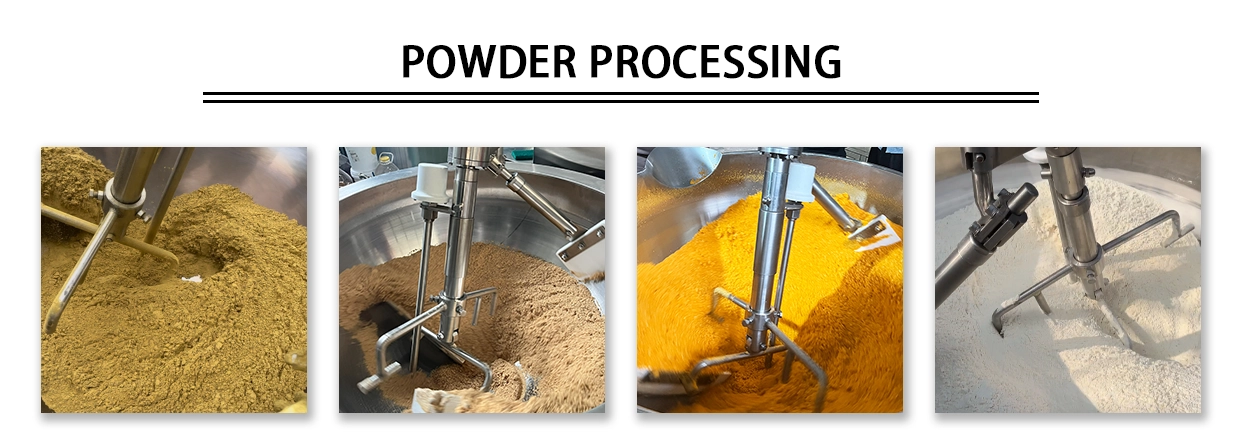
A commercial cooking mixer is not limited to liquid or semi-liquid foods.
Some dry or semi-dry food materials can also be heated, dried or processed in suitable cooking and mixing equipment, depending on their formulation and process requirements.
Examples include:
- Starch
- Flour
- Corn flour
- Rice flour
- Nut powder
- Peanut powder
- Sesame powder
- Spice powder
- Seasoning powder
- Cereal powder
- Other food powders
What can a cooking mixer do with food powders?
Depending on the application, the equipment may be used for:
Heating + Mixing + Roasting + Drying
The objective may be to remove moisture, improve the condition of the raw material, evenly distribute ingredients or achieve a specific processing result.
For these applications, the machine must be evaluated according to:
- Powder particle size
- Moisture content
- Bulk density
- Required temperature
- Required mixing intensity
- Processing time
- Final product condition
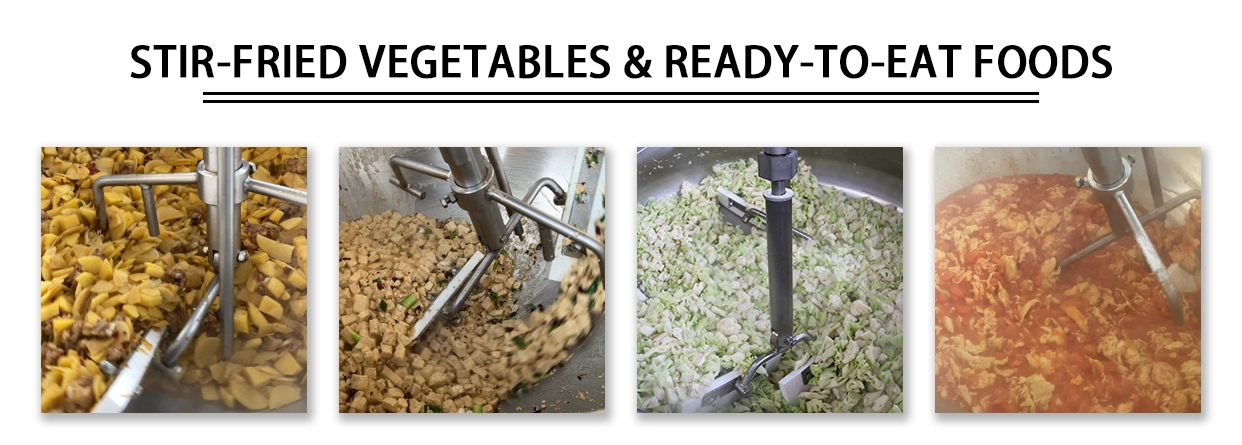
5. Stir-Fried Vegetables & Ready-to-Eat Foods
The fifth application is stir-fried foods and ready-to-eat food production.
This category is particularly relevant to central kitchens, prepared-food manufacturers, restaurant groups and companies producing ready-to-eat meals.
Typical applications include:
- Tomato scrambled eggs
- Stir-fried celery
- Stir-fried pork with peppers
- Stir-fried vegetables
- Mixed vegetables
- Cooked vegetable dishes
- Stir-fried meat and vegetables
- Fried rice
- Fried noodles
- Prepared meal components
Why use a commercial cooking mixer for stir-fried foods?
Traditional stir-frying requires operators to continuously move the ingredients in a hot cooking vessel.
For larger production volumes, manual stirring becomes increasingly labor intensive.
A commercial food cooking machine can mechanize the cooking and stirring process.
This can help manufacturers:
- Reduce manual stirring
- Improve batch consistency
- Increase batch size
- Standardize cooking procedures
- Improve production efficiency
6. Frying & Oil-Based Food Processing
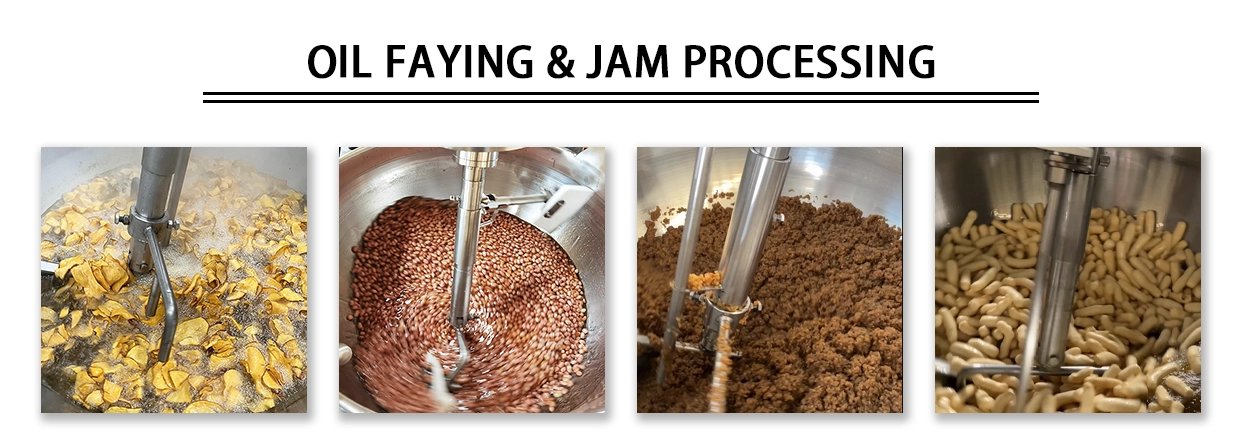
The sixth category is frying and oil-based food processing.
Commercial and industrial food manufacturers may require heated equipment for frying snacks, nuts, vegetables and other products.
Examples include:
- Fried peanuts
- Fried sweet potato chips
- Fried garlic
- Fried nuts
- Fried snack foods
- Other oil-fried ingredients
Oil-based processing can also include products such as rendered animal fat, depending on the machine configuration and food-processing requirements.
What should be considered for frying applications?
Frying equipment needs to consider much more than vessel volume.
Important factors include:
- Oil temperature
- Heating capacity
- Product loading
- Oil circulation
- Product movement
- Frying time
- Oil filtration
- Discharge method
7. Fruit Jam, Fruit Paste & Food Concentrates
Fruit-based products are another important application for industrial cooking mixers.
Typical products include:
- Strawberry jam
- Mango jam
- Blueberry jam
- Pineapple jam
- Fig paste
- Fruit paste
- Fruit filling
- Fruit puree
- Fruit syrup
- Fruit concentrate
Why is mixing important when processing fruit products?
During fruit cooking, water may be removed and the product becomes more concentrated.
As concentration increases, viscosity can also increase.
The product therefore needs to remain moving during heating.
A suitable fruit jam cooking mixer can combine heating and mixing to support batch processing.
For some fruit concentrates and high-viscosity products, a vacuum cooking mixer or vacuum horizontal mixer may also be considered when the process requires vacuum treatment.
The appropriate system depends on:
- Fruit type
- Sugar concentration
- Solids content
- Target viscosity
- Required temperature
- Batch size
- Vacuum requirements
This means “fruit jam” is not one single machine specification. Different formulations can require different equipment configurations.
8. Candied Nuts & Nut Brittle Production
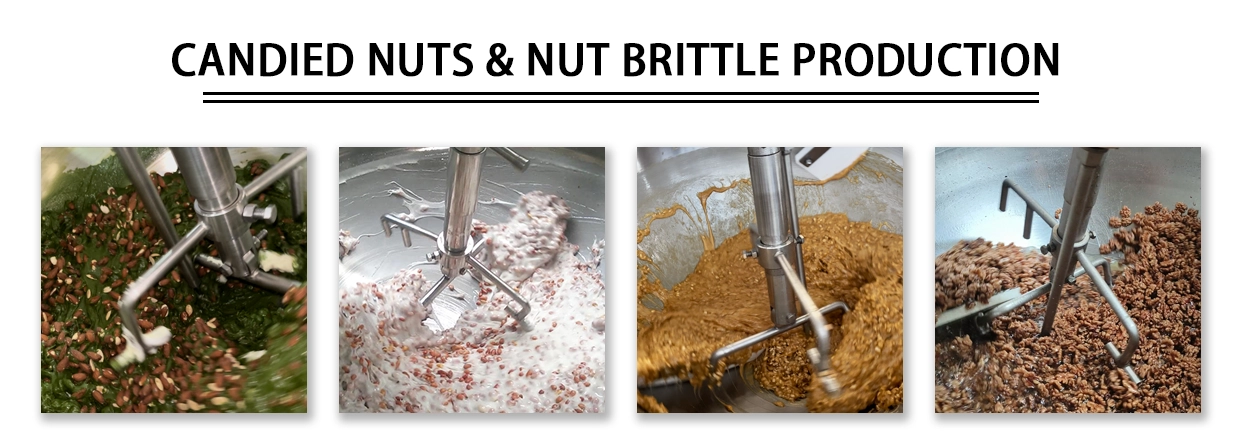
Candied nuts and nut-based confectionery are another important application for commercial cooking and mixing equipment.
These products typically involve a combination of sugar cooking, coating, mixing and nut processing, making an industrial cooking mixer particularly useful for larger-scale production.
Typical products include:
- Peanut candy
- Peanut brittle
- Peanut crisps
- Candied peanuts
- Honey walnuts
- Candied walnuts
- Caramelized nuts
- Almond brittle
- Cashew brittle
- Mixed nut brittle
- Snowflake crisps
During production, sugar or syrup is heated to the required condition and mixed with peanuts, walnuts or other nuts. The mixture needs to be continuously stirred to achieve an even coating and consistent distribution of the nuts.
For sticky sugar-based materials, a suitable cooking mixer can help maintain product movement during heating and reduce excessive material buildup on the cooking surface.
Different products require different processing conditions. For example, peanut candy and honey walnuts may require different heating temperatures, sugar concentrations and mixing methods.
Important equipment considerations include:
- Sugar cooking temperature
- Nut loading ratio
- Product viscosity
- Mixing speed
- Heating capacity
- Scraper configuration
- Batch size
- Discharge method
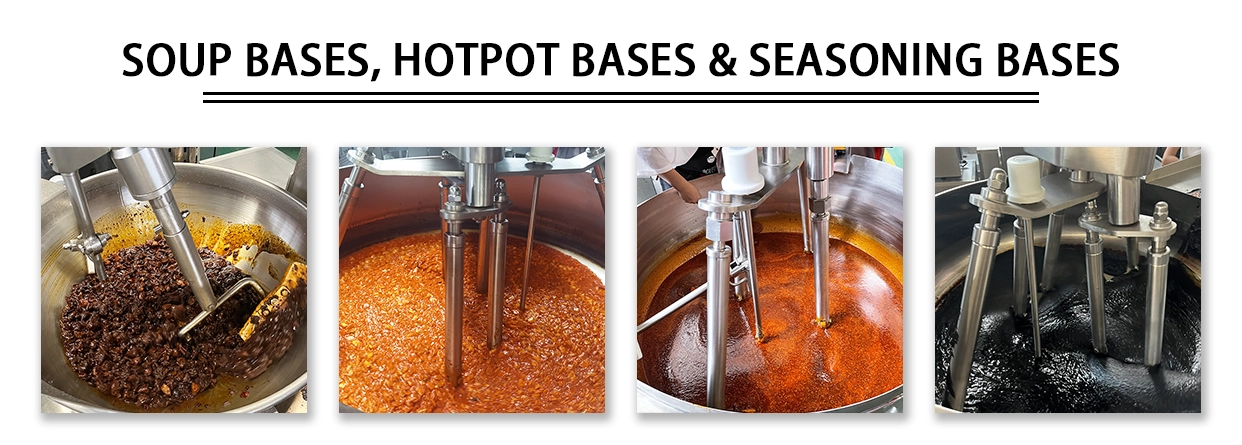
9. Soup Bases, Hotpot Bases & Seasoning Bases
Another major application is the production of food bases and concentrated seasoning products.
These are widely used in food factories, restaurants, central kitchens and prepared-food operations.
Typical products include:
- Soup base
- Instant soup base
- Hotpot base
- Curry base
- Seasoning base
- Cooking base
- Concentrated broth
- Meat sauce base
- Flavoring mixture
- Other concentrated food ingredients
Why use an industrial cooking mixer for food bases?
Food bases often contain several ingredients that need to be combined and heated simultaneously.
The ingredients may include:
- Oil
- Spices
- Vegetables
- Seasonings
- Meat ingredients
- Sugar
- Starch
- Water
- Other food components
A suitable industrial food mixer can provide continuous mixing during the cooking process.
For high-viscosity or concentrated bases, stronger mixing and scraper systems may be required.
For manufacturers producing different recipes, programmable process settings can also help standardize batch processing, depending on the machine configuration.
10. Rice, Grain & Main-Dish Processing
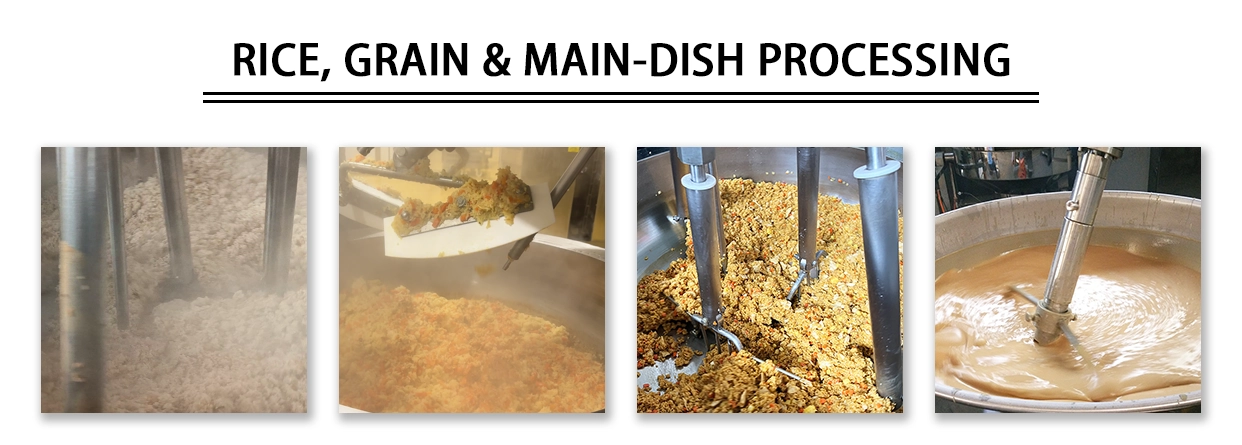
The tenth category is rice, grain and main-dish processing.
This category includes applications where food needs to be cooked and mixed in relatively large batches.
Examples include:
- Fried rice
- Seasoned rice
- Rice-based prepared foods
- Grain mixtures
- Cereal-based foods
- Cooked grain products
- Fried noodles
- Ready-to-eat meal components
Why use industrial cooking equipment for rice and main dishes?
When production moves from a restaurant kitchen to a central kitchen or factory, manually cooking large batches can require significant labor.
A commercial cooking machine can mechanize part of the process and help standardize:
- Cooking time
- Heating
- Ingredient distribution
- Batch size
- Operator workload
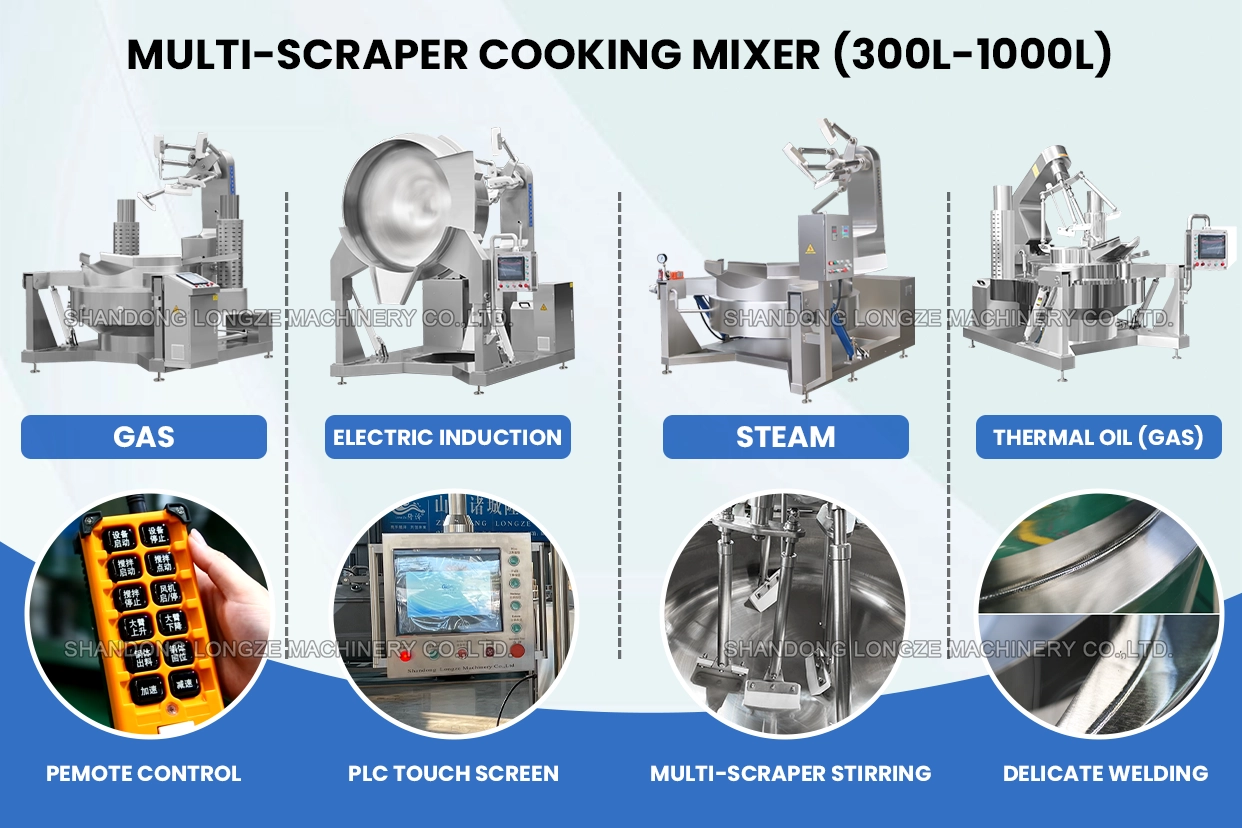
Looking for reliable cooking mixers for your food processing plant? Contact Longze Machinery for machine specifications, technical details, videos, and customized quotes.