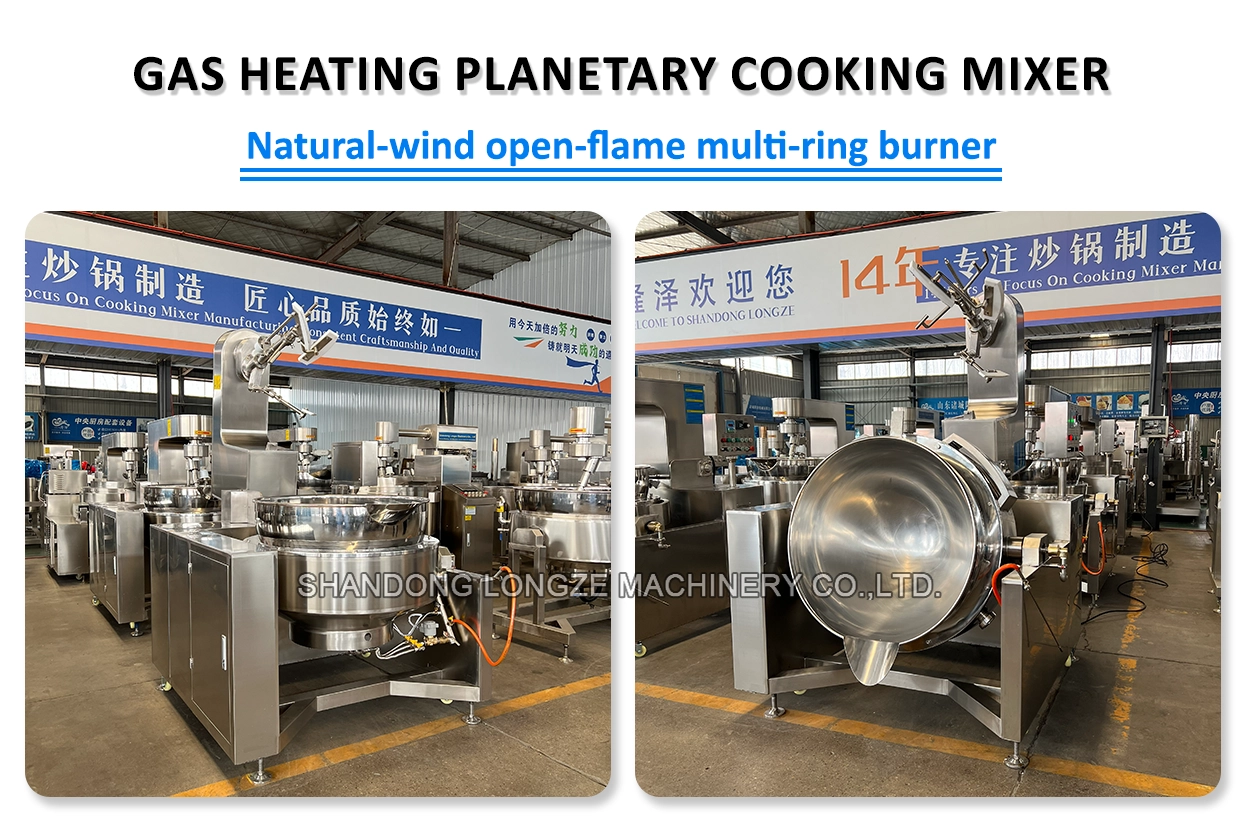
Product Introduction: What Is a Gas-Heated Planetary Cooking Mixer?
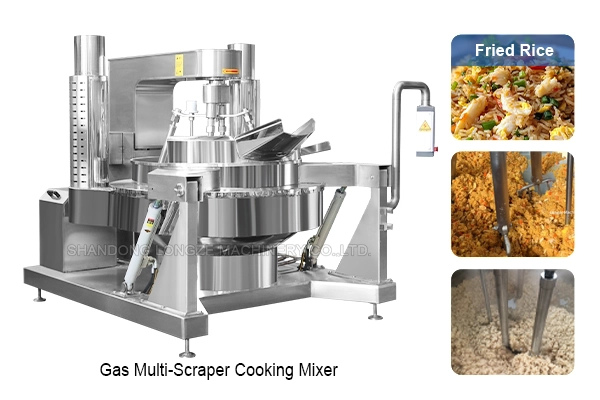
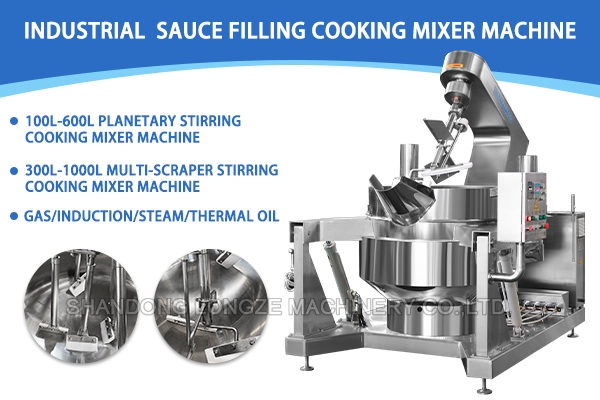
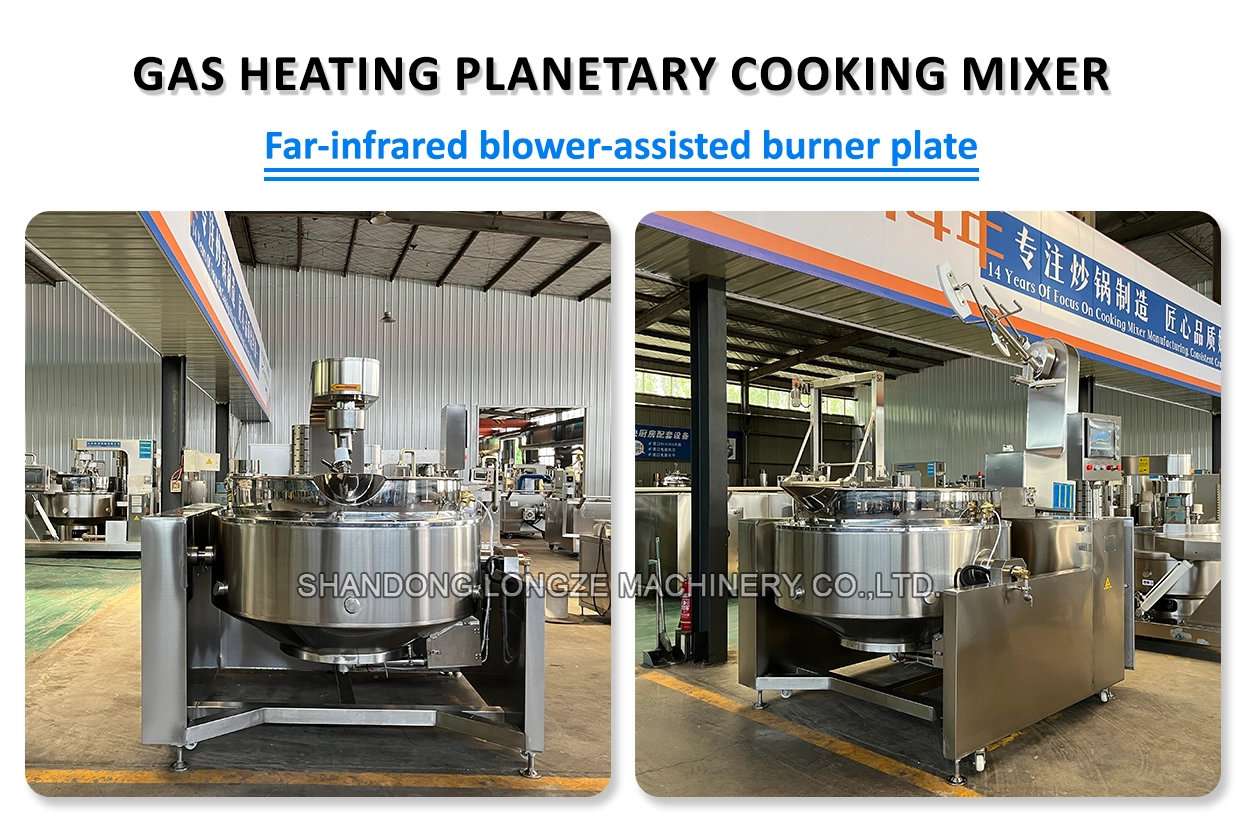
A planetary cooking mixer combines direct heating with planetary stirring to support cooking, frying, sauce preparation, paste processing, filling production and other food-processing applications. In a gas-heated model, the gas burner heats the bottom of the cooking vessel directly.
The planetary stirring system follows a manual stir-frying motion. The scraper assembly works against the pot bottom and walls, helping reduce dead zones and supporting more uniform mixing. The machine can be configured for regular materials or customized for extra-high-viscosity products.
This article focuses on how to evaluate the gas-heated planetary cooking mixer itself: its confirmed burner structures, gas requirements, capacity range, stirring configuration and questions to clarify before quotation.
Core Structure and Working Principle
1.Direct gas heating
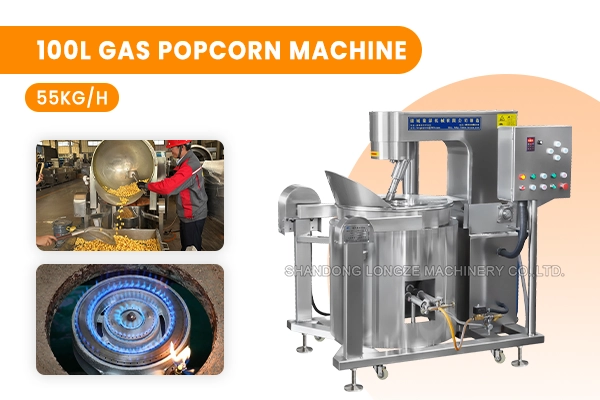
The gas heating method uses LPG or natural gas and transfers heat to the cooking vessel through a gas burner under the pot. Direct gas heating provides high firepower and fast heating. The exact burner assembly must be selected and confirmed for the customer’s fuel and installation conditions.
2.Planetary stirring and scraper contact
The planetary stirring system simulates manual stir-frying. It scrapes the pot bottom and walls while mixing the product, helping support more even mixing across the vessel. Actual process results depend on the material, formulation, loading, heating curve and operating conditions.
3.Burner structures available for selection
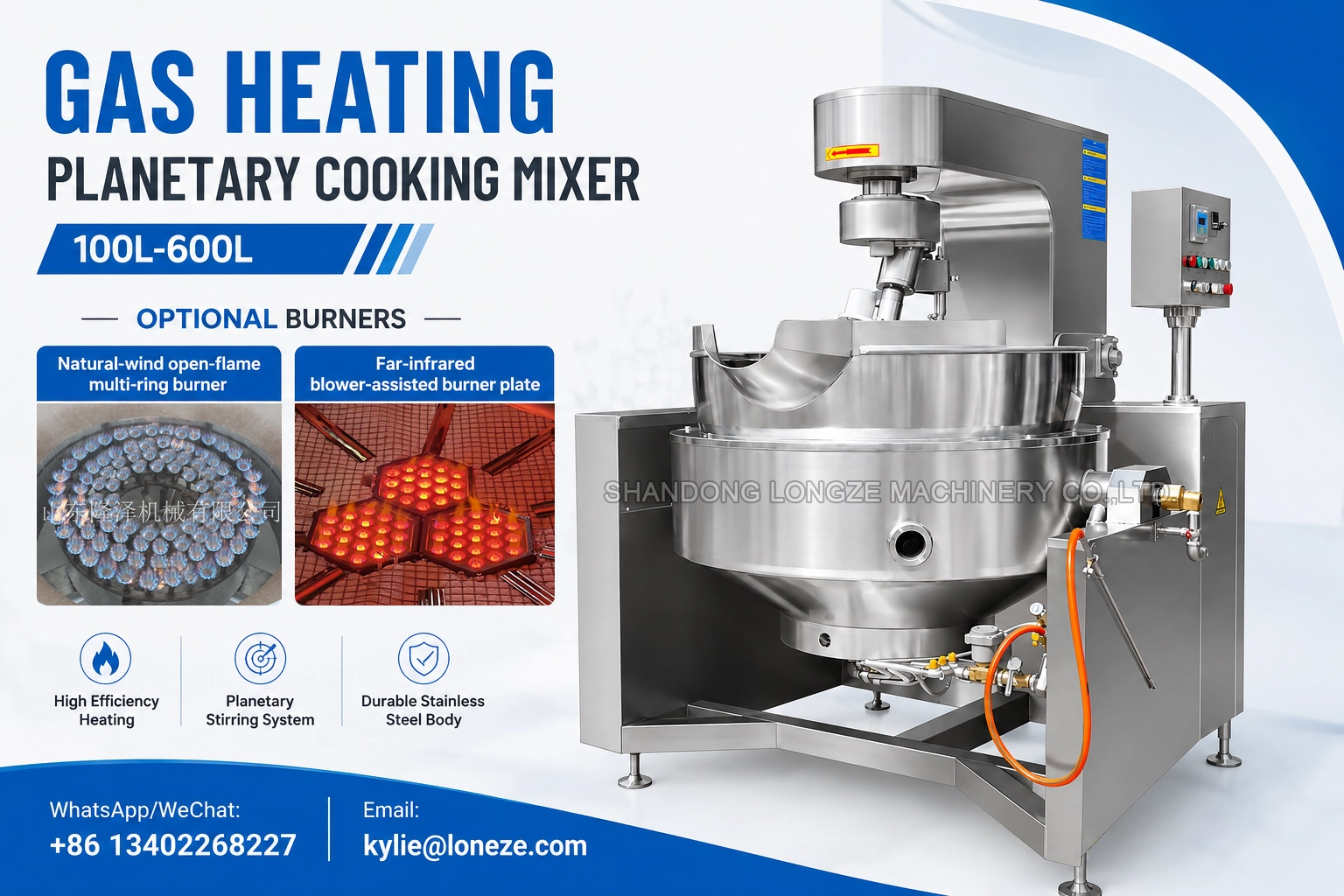
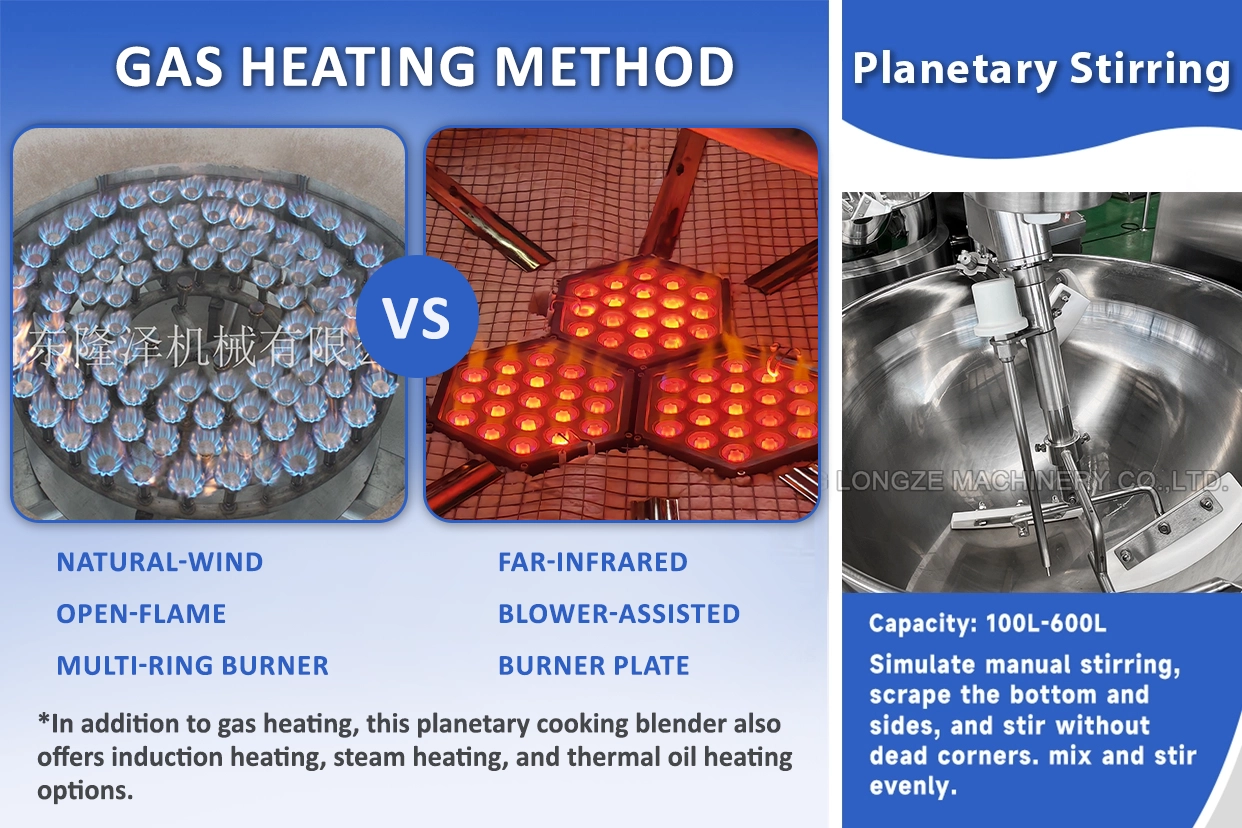
Available gas-heating configurations include two burner structures:
Natural-wind open-flame multi-ring burner:
●Uses natural air supply for combustion and supports regular fire adjustment.
Far-infrared blower-assisted burner plate:
●Uses premixed gas and air, provides flameless thermal-radiation heating and has 10-level digital firepower adjustment with automatic air-fuel ratio control.
These are two burner structures for the planetary cooking mixer.
Natural-Wind Burner vs. Far-Infrared Burner: How to Choose?
This is a structure-and-selection comparison, not a universal efficiency ranking. No external heat-efficiency or cost-saving percentages are stated.
| Selection factor | Natural-wind open-flame multi-ring burner | Far-infrared blower-assisted burner plate |
| Combustion approach | Natural air supply with open flame | Premixed gas and air with flameless thermal radiation |
| Fuel | LPG or natural gas | LPG or natural gas |
| Natural-gas pressure | 5000 Pa | 5000 Pa |
| LPG pressure | 0.1–0.2 MPa | 5000 Pa |
| Firepower control | Regular adjustment | 10-level digital firepower adjustment; automatic air-fuel ratio control |
| Ignition/flame monitoring | Two-needle ignition and flame detection arrangement | Single-needle arrangement; final safety configuration requires confirmation |
| Burner enclosure | Open structure | Sealed structure with safety explosion-proof holes |
| Selection question | Is a conventional open-flame configuration suitable for the site? | Does the customer require the confirmed infrared/blower-assisted configuration and its control features? |
Capacity, Vessel Size and Stirring Power
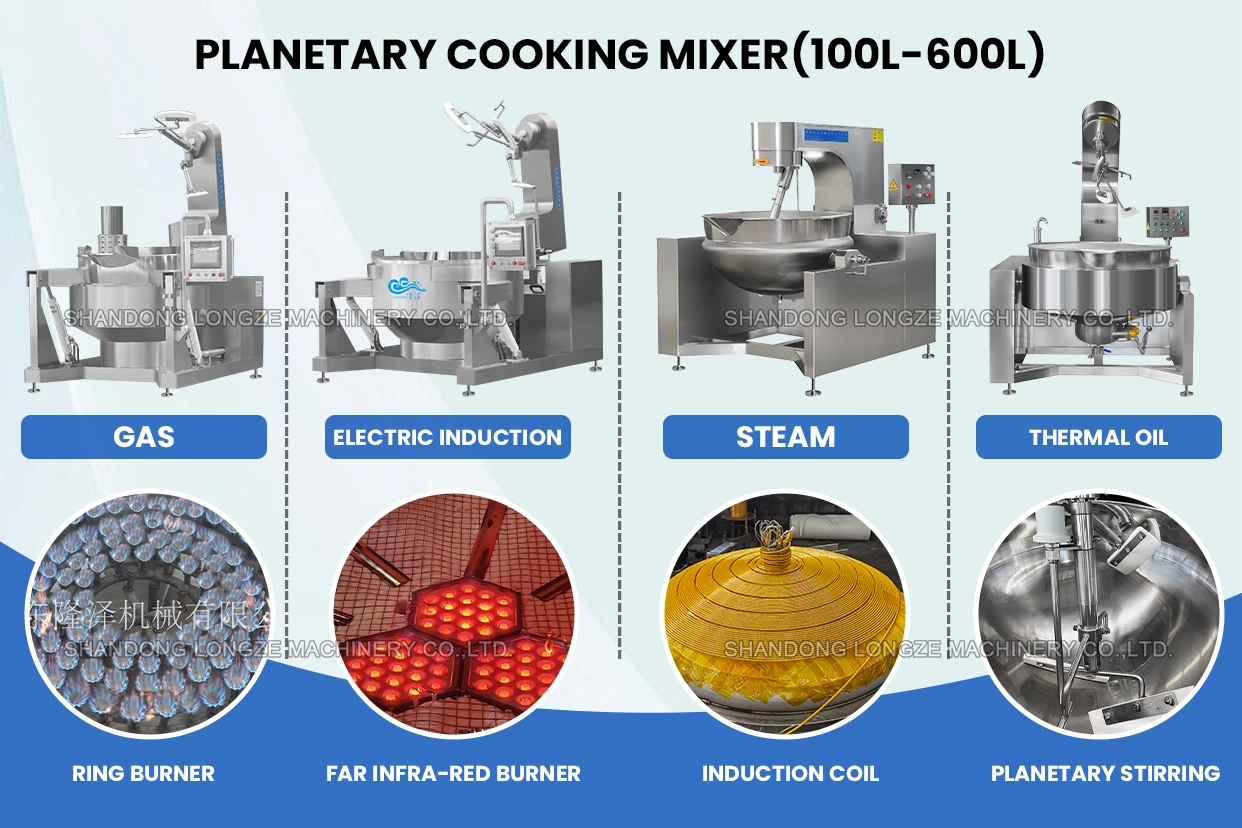
The confirmed planetary cooking mixer capacity range is 100L–600L. The standard vessel diameter and stirring-power reference are listed below.
| Pot diameter | Capacity | Standard stirring power |
| 700 mm | 100L | 1.5 kW |
| 800 mm | 150L | 1.5 kW |
| 900 mm | 200L | 1.5 kW |
| 1000 mm | 300L | 2.2 kW |
| 1100 mm | 400L | 2.2 kW |
| 1200 mm | 500L | 2.2 kW |
| 1300 mm | 600L | 2.2 kW |
For extra-high-viscosity products, a customized stirring motor of 3 kW, 3.7 kW or 5 kW may be available. These are customization options, not standard stirring-power values for every machine.
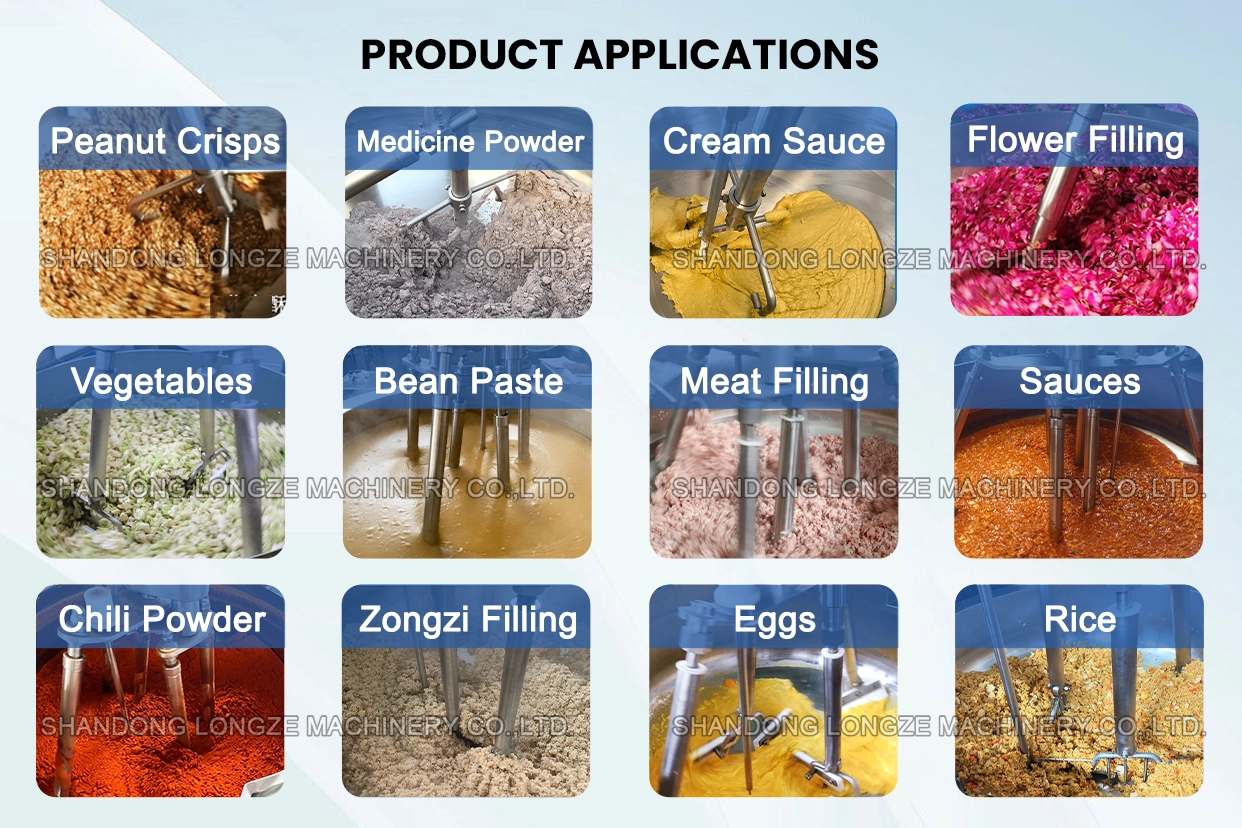
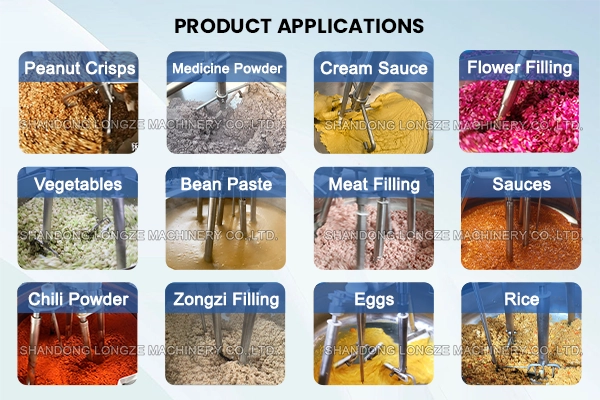
Applications and Suitability Boundaries
●Dishes and meat products
●Sauces and fillings
●Bean paste and lotus paste
●Jam and similar viscous food products
●Nuts and other food materials with different viscosity levels
The gas-heated configuration is relevant when the customer’s site supports the required gas fuel and pressure conditions and when direct heating fits the process.