1.When Conventional Cooking Equipment Creates Production Problems
Large-batch food processing can become difficult when the heating system and stirring system are not designed to work together. Manual stirring may require significant labor and can make it difficult to keep material moving across the vessel. A basic cooking vessel may heat the product without providing the mixing action needed for sauces, pastes, jams or other viscous materials.
Food processors also need to select equipment around real factory conditions. Available electrical infrastructure, batch capacity, product viscosity and production schedule all affect the suitable machine configuration. Choosing a machine by vessel size alone can lead to an unsuitable stirring power or an electrical requirement that has not been planned into the production area.
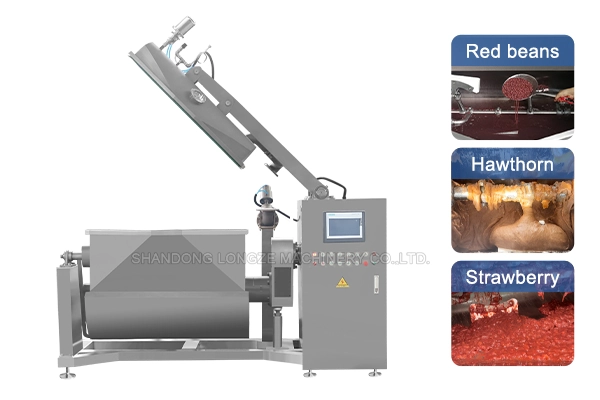
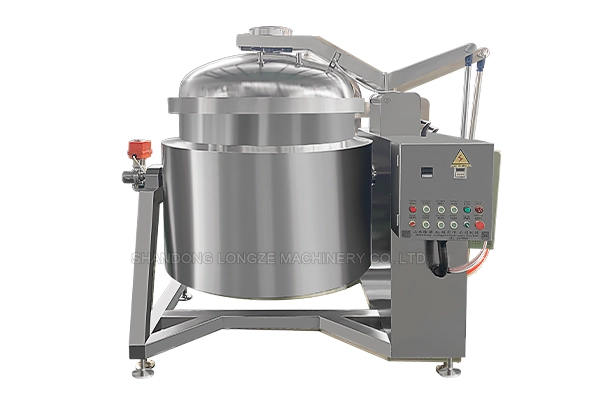
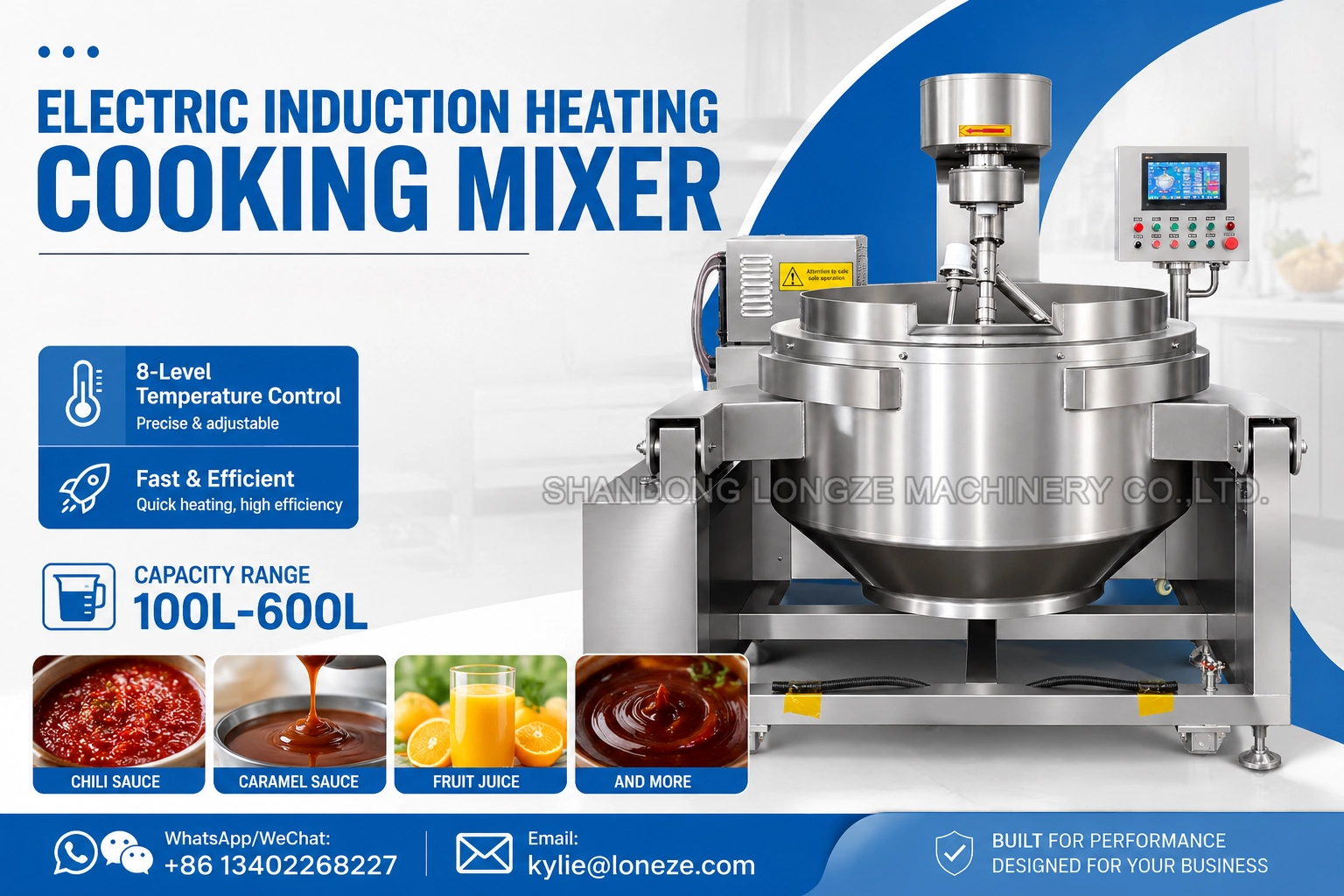
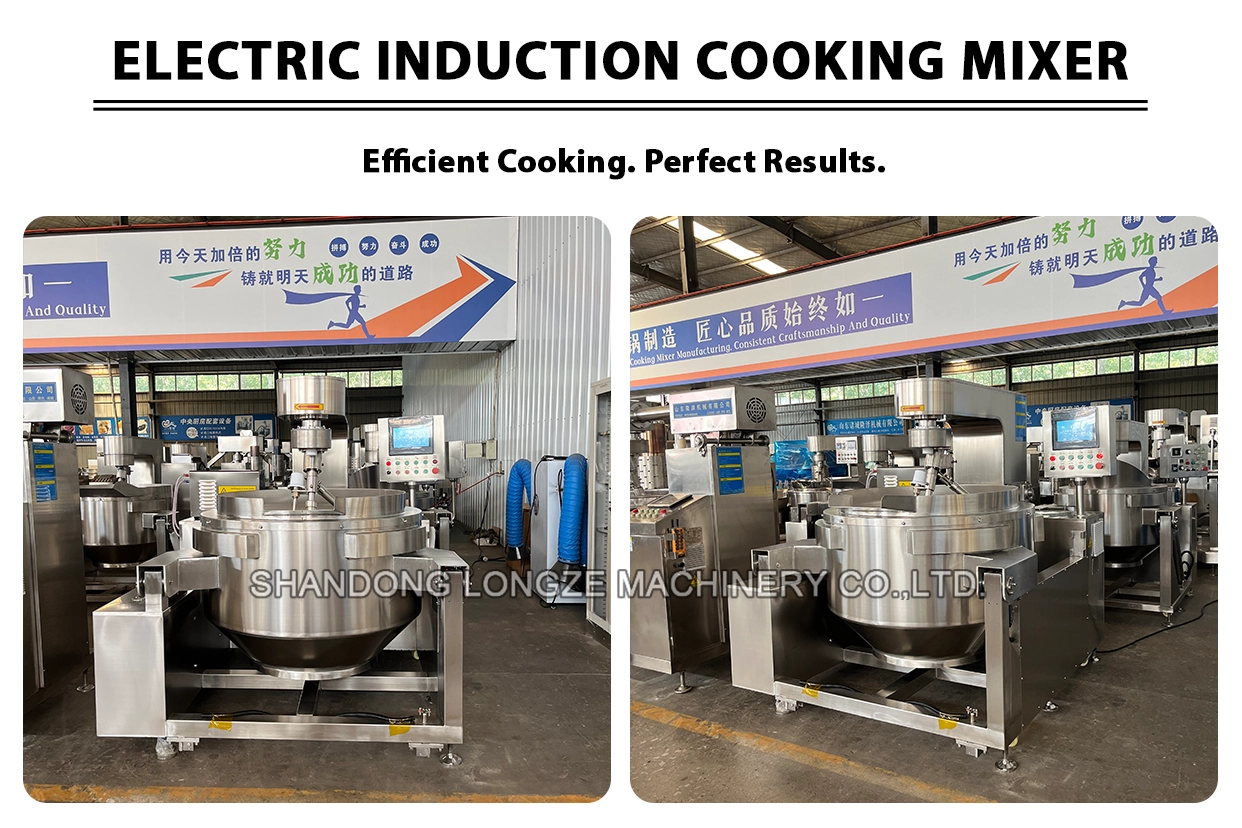
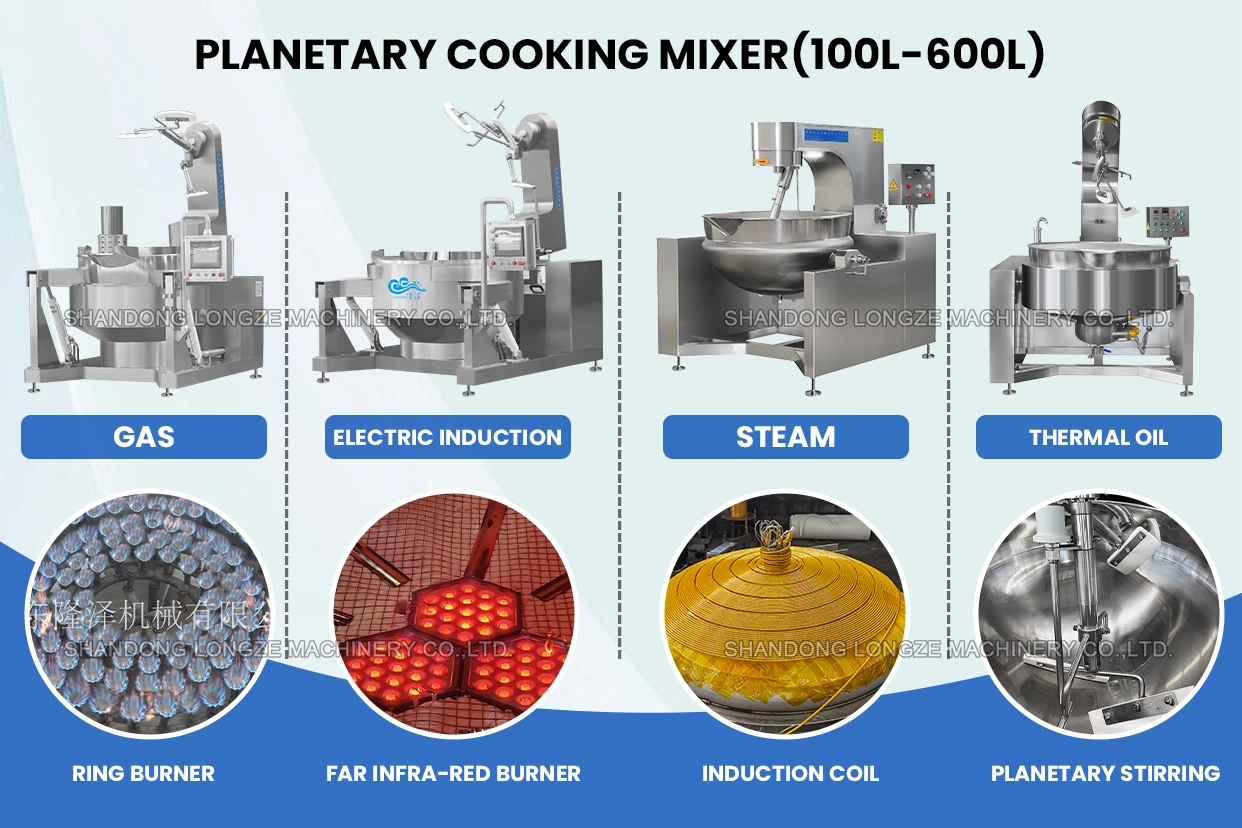
The electric induction heated planetary cooking mixer is designed for buyers who need integrated heating and planetary mixing in one industrial machine. Electromagnetic induction converts electrical energy into heat, while the planetary mixing system moves through the vessel and scrapes the pot bottom and walls. The result is a configuration that supports controlled heating and consistent movement of the product during processing.
This article focuses on product value and selection for the electric induction configuration. It does not replace engineering review for a specific recipe or installation.
2.How the Electric Induction Planetary Cooking Mixer Works
Electric induction heating
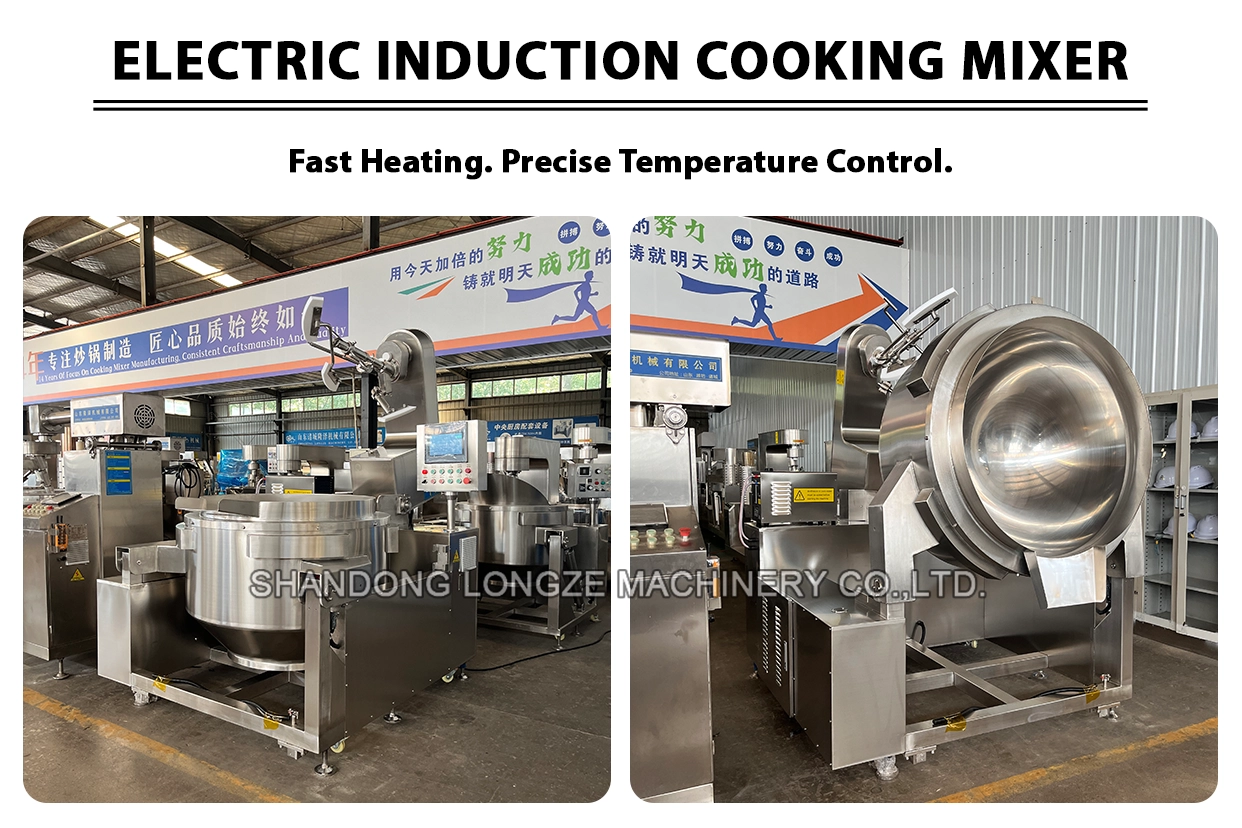
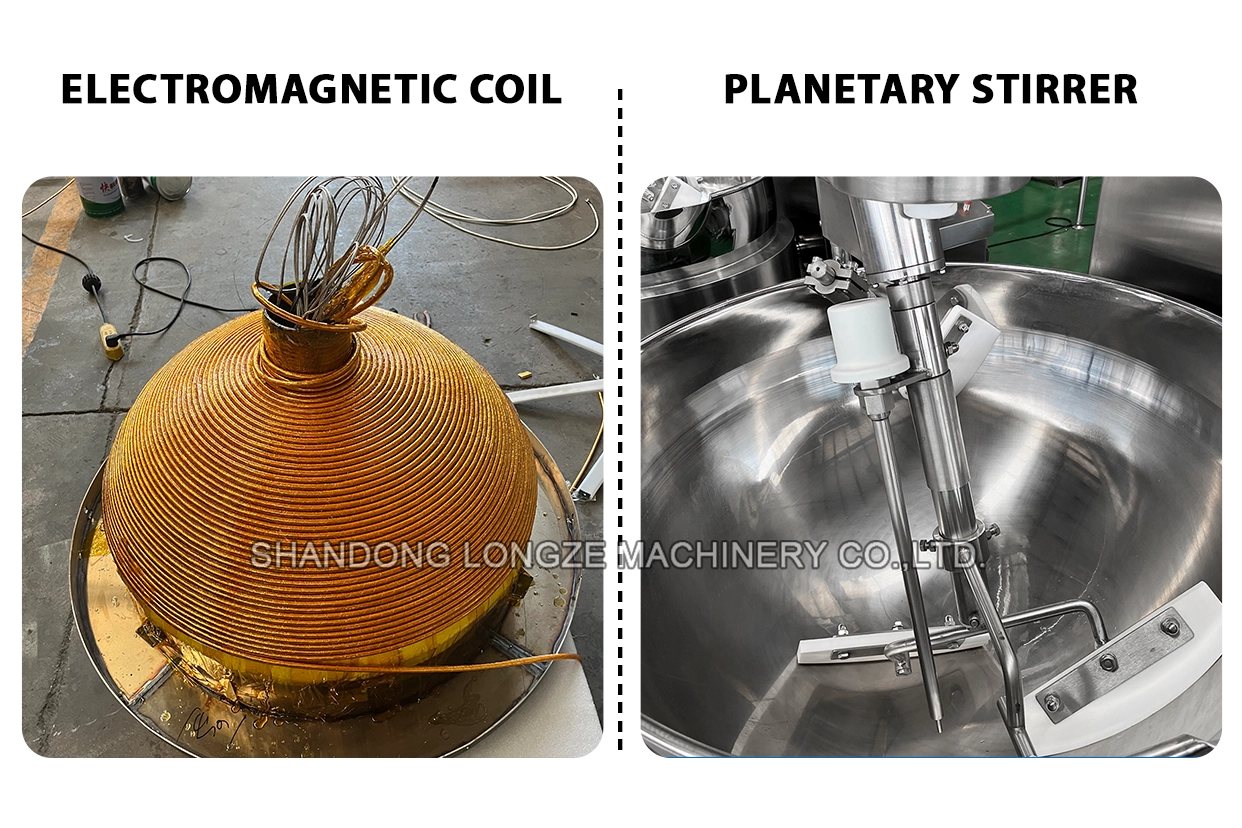
Electric Induction heating is a heating method that directly converts electrical energy into heat energy using the principle of electromagnetic induction. When a high-frequency alternating current is passed through the electromagnetic coil in the equipment, it generates an alternating magnetic field, inducing a large number of eddy currents inside the metal pot. The metal’s own resistance converts these eddy currents into heat energy, thus rapidly heating the pot and transferring the heat to the material. The entire heating process features rapid heating, high thermal efficiency, precise temperature control, uniform heating, no open flame, and energy saving and environmental friendliness, making it particularly suitable for rapid heating and automated production in food processing equipment.
This system can achieve eight levels of precise temperature control. Operators can select the appropriate heating level according to different stages of cooking. The selected electric induction heating power depends on the machine’s capacity.
Planetary stirring
The planetary stirring system simulates a manual stir-frying motion. Its movement reaches the bottom and walls of the cooking vessel, helping reduce dead angles and support uniform mixing. This is important for materials that may settle, stick or become more viscous during heating.
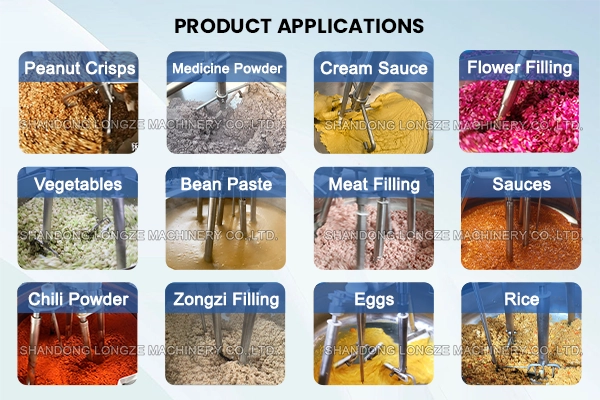
The planetary system can be used with high- and low-viscosity food materials. Actual process results depend on the formulation, loading, material behavior, heating procedure and operating conditions. Extra-high-viscosity products may require a customized stirring motor and engineering review.
3.Technical Specifications
| Pot diameter | Capacity | Standard stirring power | Induction heating power |
| 700 mm | 100L | 1.5 kW | 20 kW |
| 800 mm | 150L | 1.5 kW | 20 kW |
| 900 mm | 200L | 2.2 kW | 40 kW |
| 1000 mm | 300L | 2.2 kW | 40 kW |
| 1100 mm | 400L | 2.2 kW | 40 kW |
| 1200 mm | 500L | 2.2 kW | 40 kW |
| 1300 mm | 600L | 2.2 kW | 60 kW |
The heating power depends on the selected machine model. Three-phase power is required for the electric induction configuration.
In addition to induction heating, we also offer gas heating, steam heating and thermal oil heating.
4.Key Product Value for B2B Food Processors
*Eight-level precise temperature control
The induction heating system has eight precise control levels. This gives operators a clear way to adjust heating intensity during a recipe and supports more repeatable operating procedures between batches.
*Heating and planetary mixing in one machine
The heating and stirring functions are integrated into one cooking mixer. The planetary scraper movement helps keep product in motion while the induction system supplies heat, reducing the need to transfer material between separate cooking and mixing equipment.
*Configuration for different production scales
The standard planetary cooking mixer range covers 100L to 600L. The table below connects vessel diameter, capacity and standard stirring power so buyers can compare a potential configuration with their production plan.
*Selection according to material viscosity
The standard stirring power is 1.5 kW or 2.2 kW according to machine size. For extra-high-viscosity products, a customized stirring motor of 3 kW, 3.7 kW or 5 kW may be available. These are custom options, not standard values for every machine.
*Suitable for a broad food-processing scope
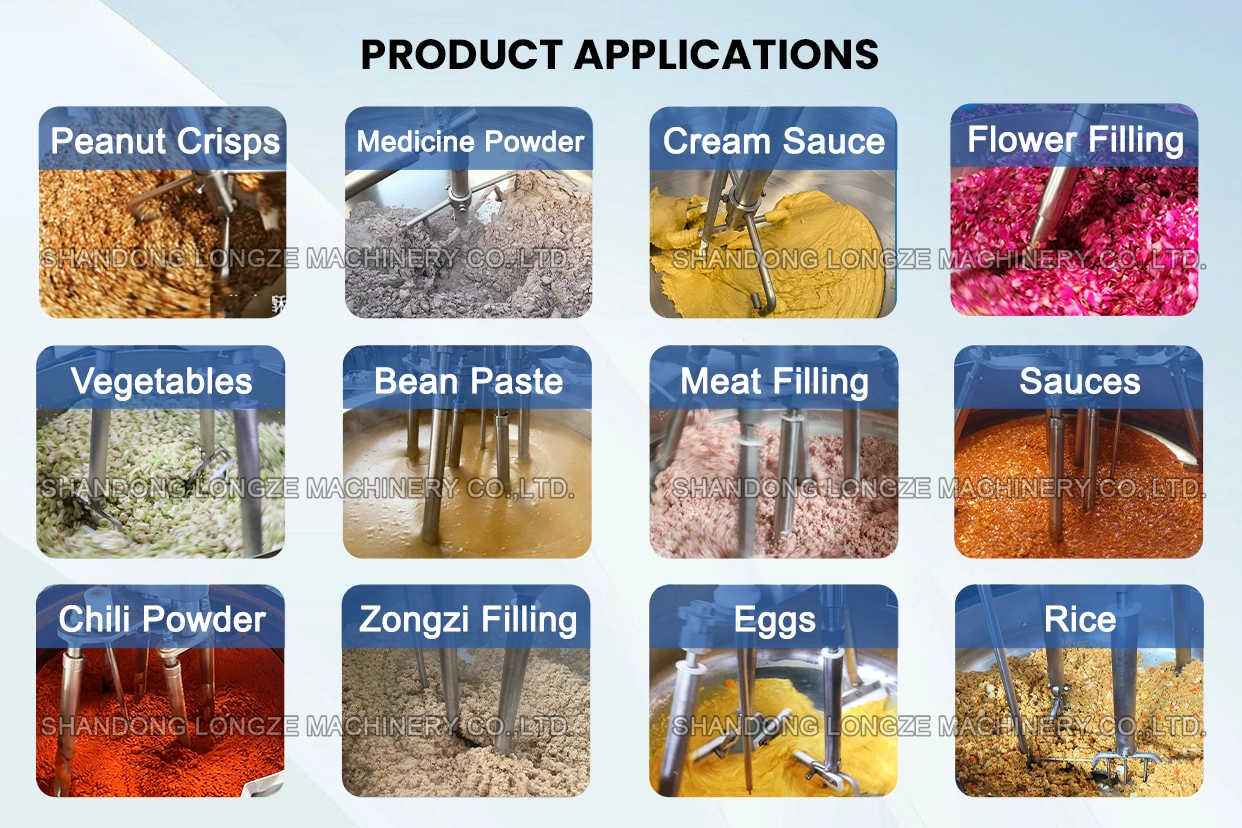
The planetary mixing structure is confirmed for dishes, meat products, sauces, bean paste, lotus paste, jams, nuts and other high- or low-viscosity materials. The final recommendation should be based on the actual product and process requirements.
5.How to Choose the Right Electric Induction Planetary Cooking Mixer
*Start with the required batch capacity
Select the machine according to the actual batch plan, not only the maximum vessel volume. The confirmed standard capacities are 100L, 150L, 200L, 300L, 400L, 500L and 600L. A 50L gas or induction model is also available for smaller requirements. The pot diameter and standard stirring power increase with machine size. Use the capacity table as a first selection reference, then confirm the effective working load and recipe conditions with an engineer.
*Confirm three-phase power at the factory
Electric induction heating requires three-phase power. Before requesting a final quotation, confirm the available electrical supply, installation conditions and factory power capacity. The selected capacity determines the applicable induction power, which is listed from 20 kW to 60 kW in the confirmed configuration table.
*Describe the material and viscosity
Provide the material name, formulation, approximate viscosity behavior and whether the product becomes thicker during heating. This information helps determine whether the standard stirring power is suitable or whether a customized 3 kW, 3.7 kW or 5 kW stirring motor should be reviewed.
*Select the transmission system
Shaft transmission has a smaller footprint and lower price and is recommended for limited space, budget-sensitive projects and regular materials. Chain transmission is more stable and is recommended for high-viscosity materials and long-time continuous production.
*Confirm the production process
A suitable quotation should reflect the complete process rather than only the machine name. Discuss the product type, batch size, heating stages, mixing requirements, production schedule and electrical conditions before the final configuration is issued.