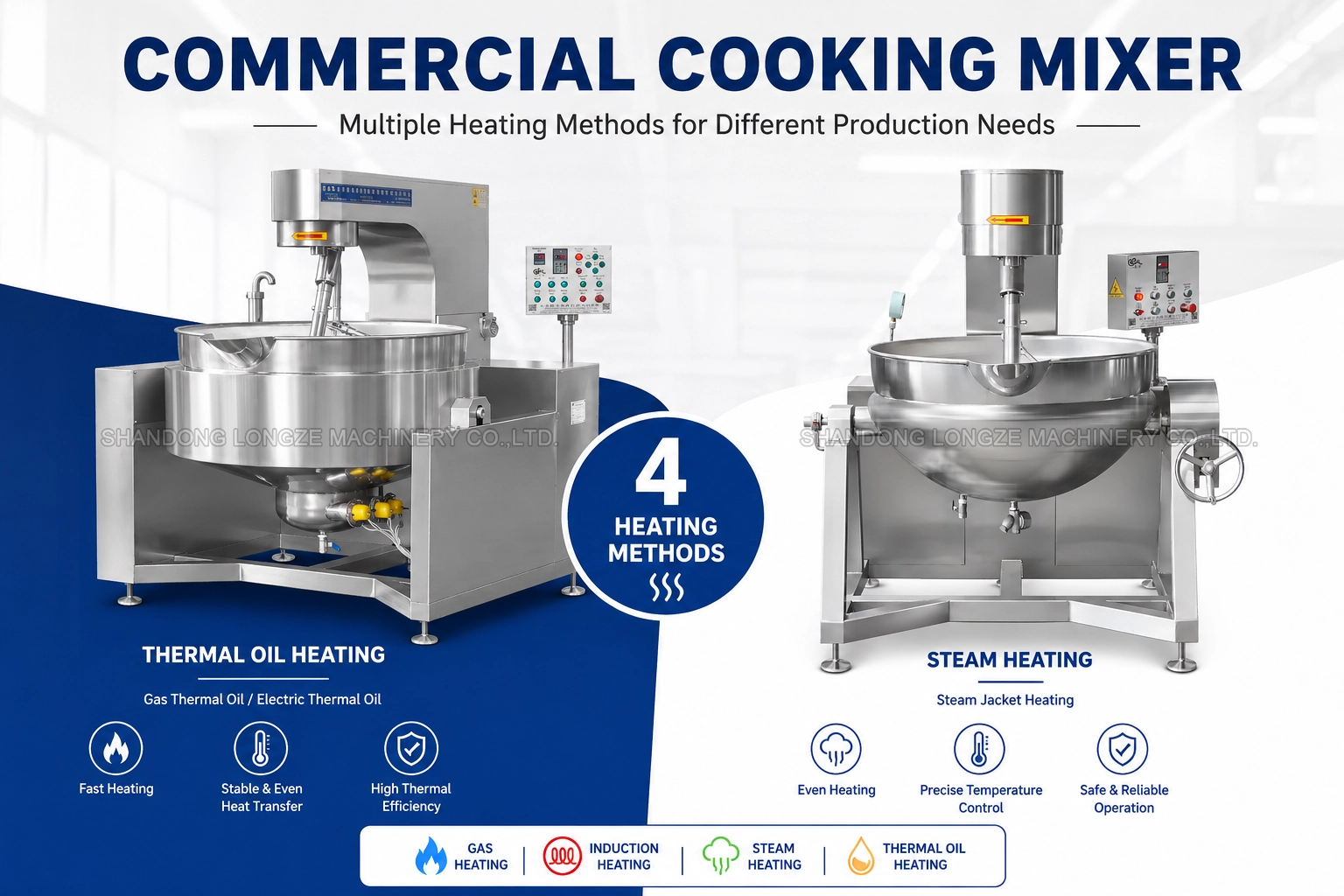
Why Choose a Commercial Cooking Mixer?
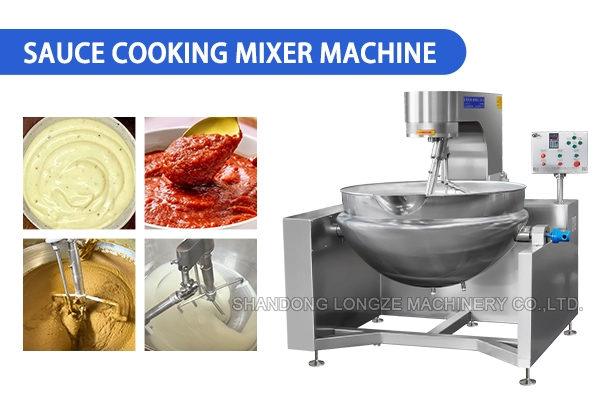
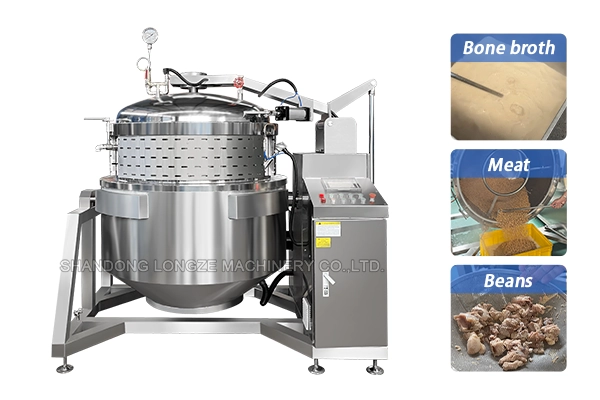
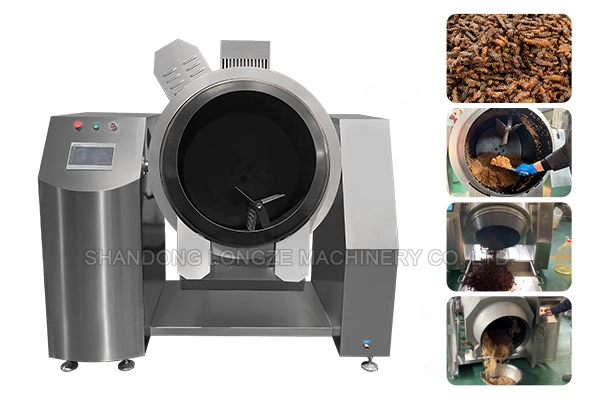
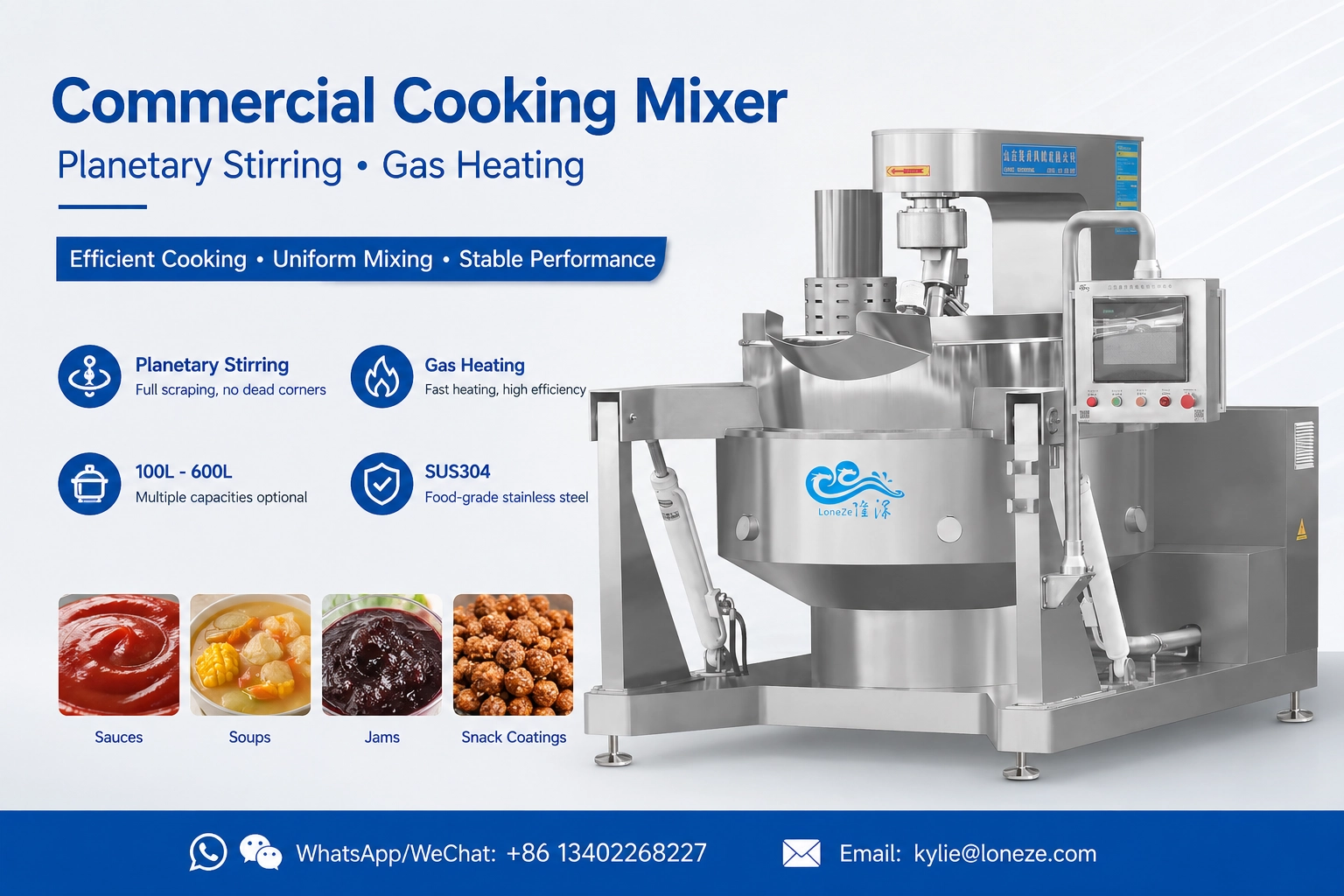
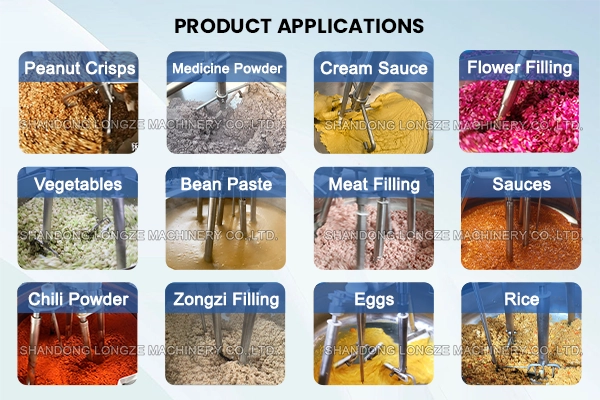
A commercial cooking mixer is an essential machine for food factories that need to heat and mix ingredients in one efficient process. It is widely used for sauces, soups, fillings, snack coatings, and seasoning production, helping manufacturers improve productivity while maintaining stable product quality.
Compared with manual stirring, this machine offers more precise temperature control, more uniform mixing, and better batch consistency. It helps reduce labor cost, lower the risk of burning or sticking, and support cleaner, more hygienic food production. For factories that produce multiple recipes or need scalable output, a commercial cooking mixer provides a practical and flexible solution.
This equipment is especially valuable for businesses that want to:
*improve batch consistency
*reduce manual labor
*increase production efficiency
*support multiple recipes
*produce food safely and hygienically
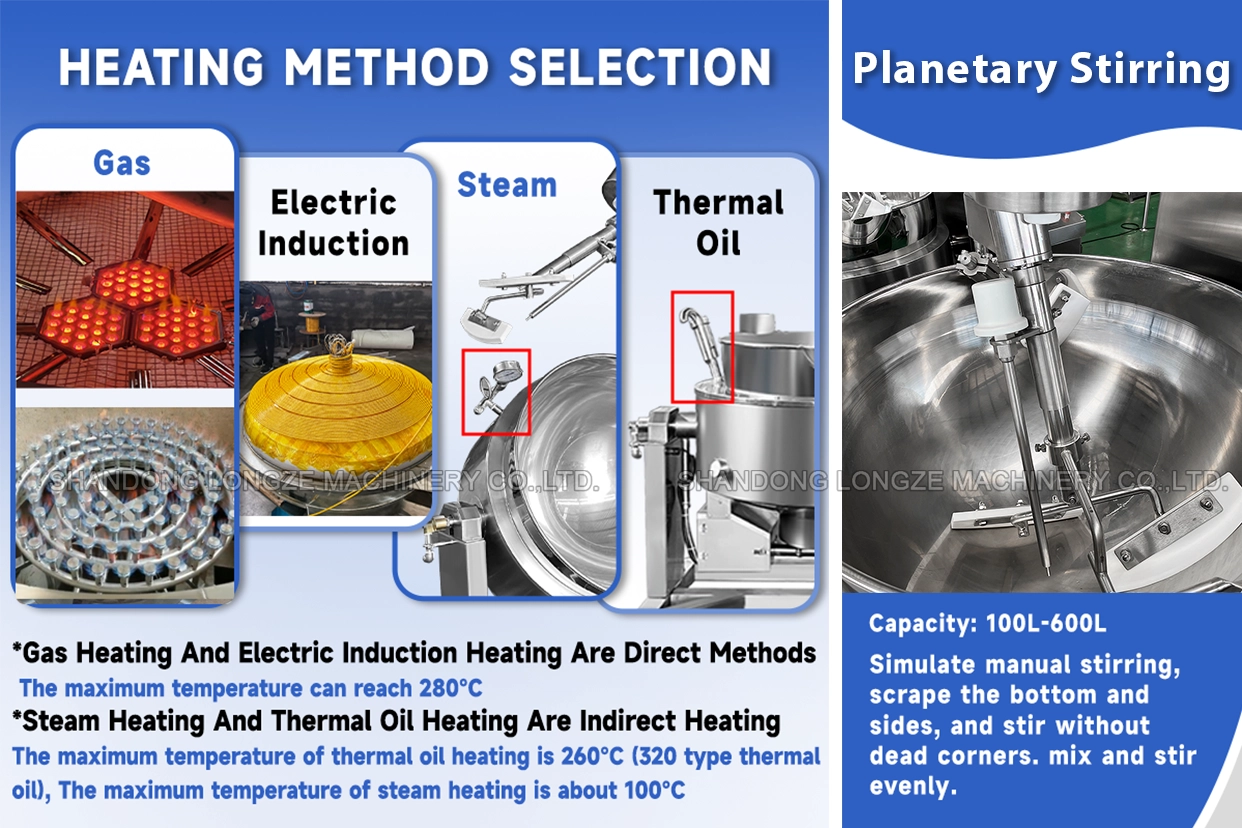
Planetary Stirring for More Even Mixing
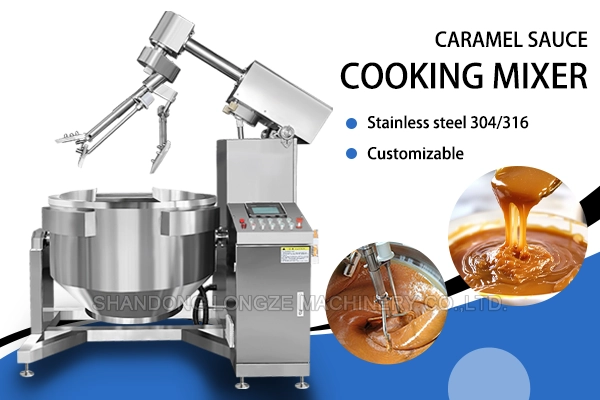
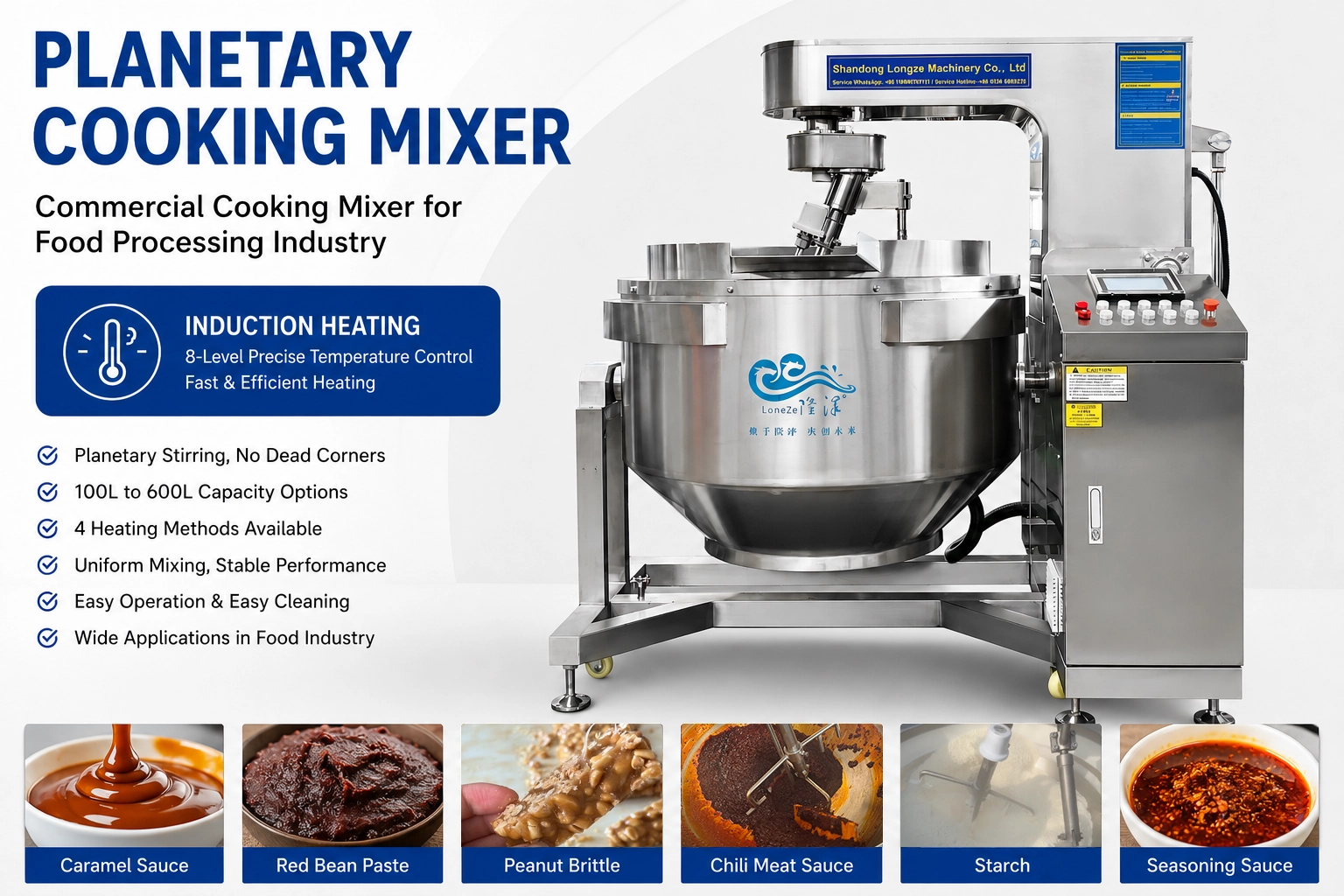
One of the most important features of this machine is its planetary stirring system. Unlike basic stirrers that move in only one direction, planetary stirring simulates the motion of manual stirring more effectively. The mixer blade rotates while also moving around the kettle, which helps the ingredients mix more thoroughly.
This design provides several benefits:
*complete scraping of the bottom and side walls
*no dead corners in the kettle
*more uniform mixing
*better heat distribution
*improved product quality
For sticky, thick, or high-viscosity food materials, planetary stirring is especially useful. It helps prevent material from sticking to the kettle and ensures that all ingredients are fully combined.
Four Heating Methods for Different Production Needs
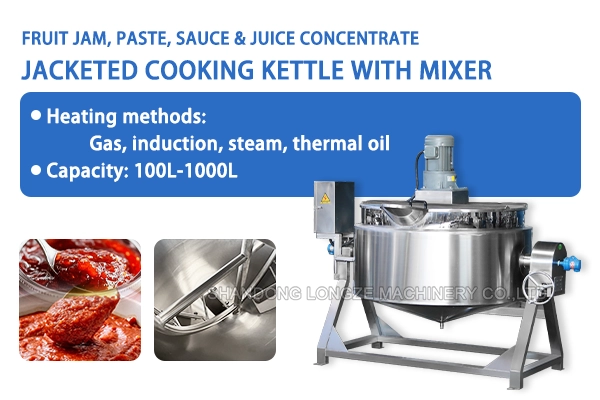
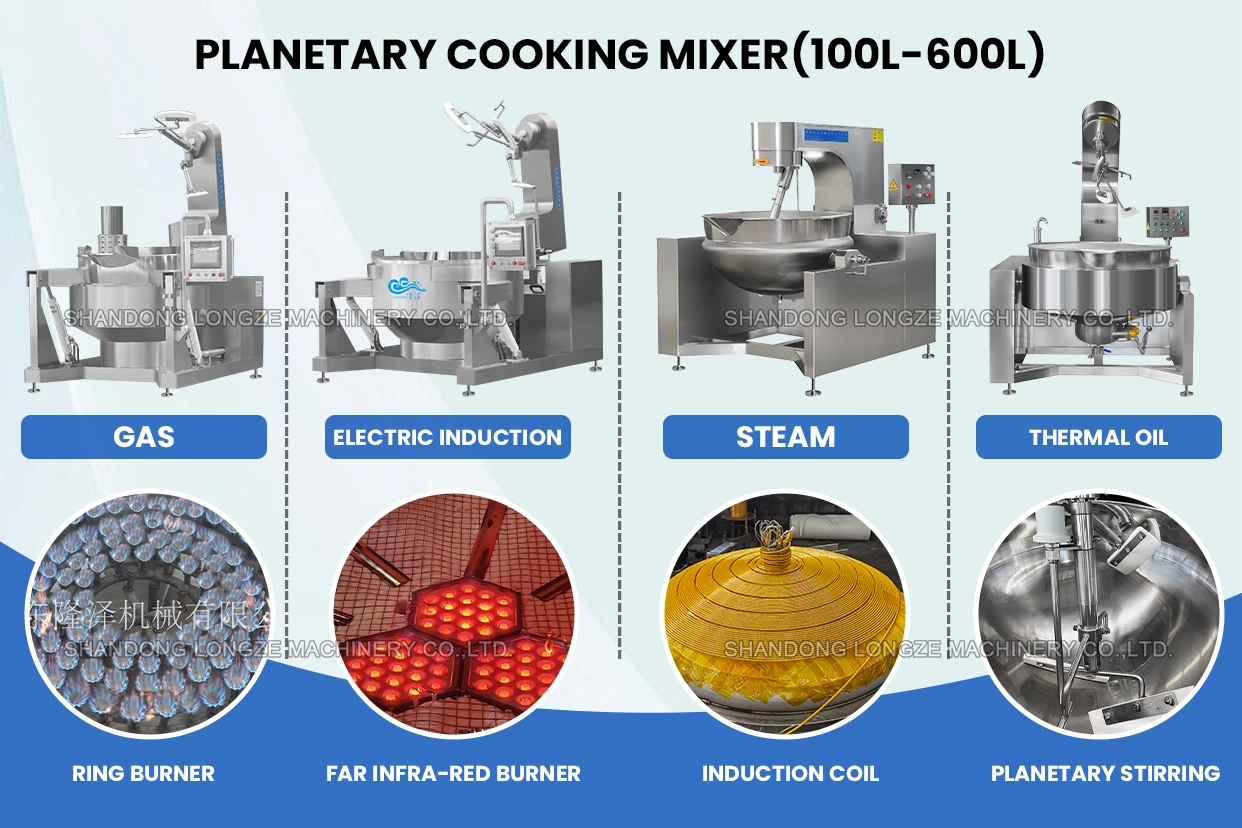
Different food factories have different energy sources and production requirements. That is why this commercial cooking mixer is available with four heating methods.
1. Gas Heating
Gas heating is suitable for factories that want strong heating power and fast temperature response. It is a practical choice for many food processing applications.
2. Electric Induction Heating
Electric induction heating offers precise temperature control and efficient heating performance. It is ideal for factories that prefer modern electric systems.
3. Steam Heating
Steam heating is widely used in large food factories and production plants where central steam supply is available. It is a good option for continuous industrial processing.
4. Thermal Oil Heating
Thermal oil heating provides stable and even heat transfer. It is often chosen for applications that require controlled heating over a longer production cycle.
Technical Data
| Heating method | Gas(NG/LPG/Alcoholic) | Electric induction | Steam | Thermal oil(Electric/Gas) |
| Pot capacity | 100L-600L | 100L-600L | 100L-600L | 100L-600L |
| Pot diameter | 700mm-1300mm | 700mm-1300mm | 700mm-1300mm | 700mm-1300mm |
| Stirring power | 1.5/2.2/3/3.7/5kw | 1.5/2.2/3/3.7/5kw | 1.5/2.2/3/3.7/5kw | 1.5/2.2/3/3.7/5kw |
| Control method | Button | PLC Touch Screen | Remote Control | AIO Control |
| Other functions | Automatic Weighing | Metering Pump | Water Pipe/Oil Filling Pipe | Temperature Control |
Common Applications in Food Processing
The commercial cooking mixer is widely used in different sectors of the food industry. It can be applied to many kinds of products, such as:
sauces, soups, fillings, jams, paste products, seasoning mixtures, snack coatings, candy cooking, nut coatings,prepared food ingredients
Because of its heating and mixing function, this machine is especially useful where ingredients must be cooked while being stirred continuously.
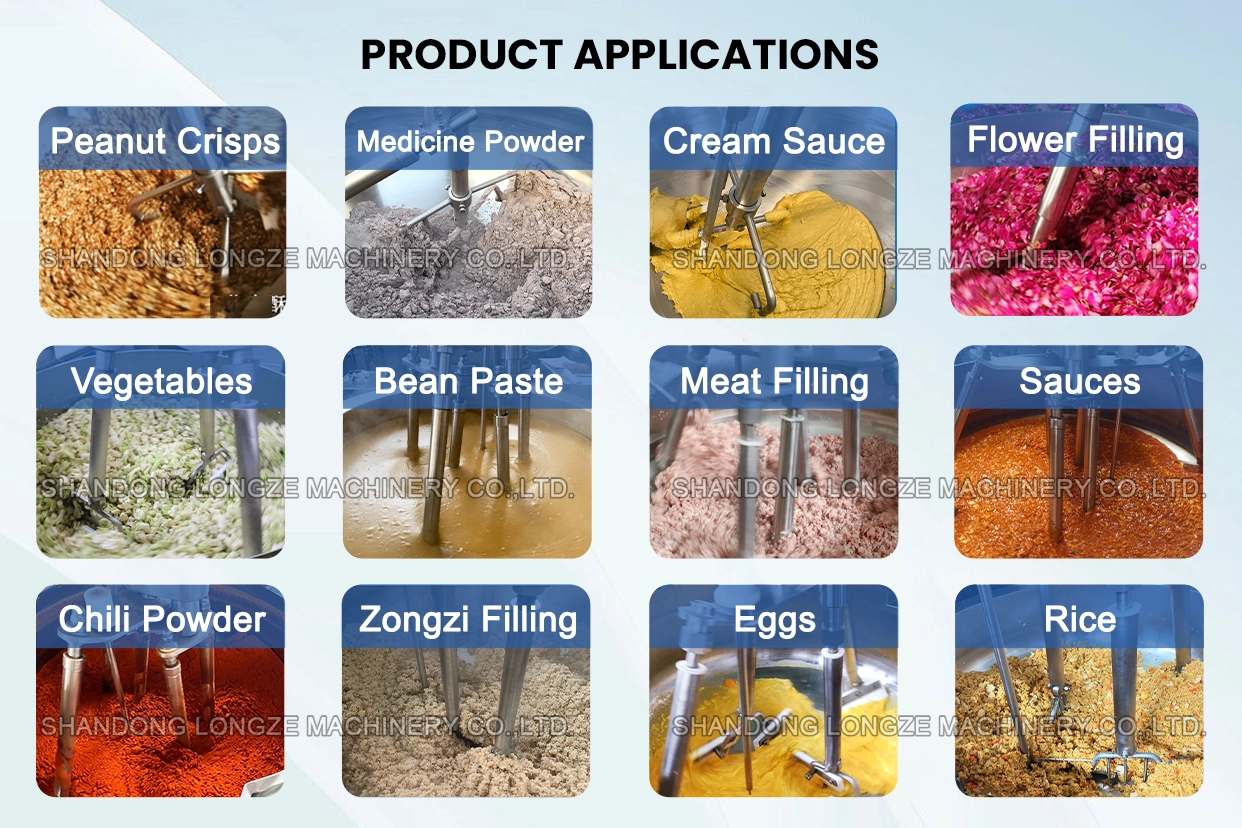
The working process of the cooking mixer is straightforward.
First, the raw materials are placed into the kettle. Then the selected heating system begins to raise the temperature. At the same time, the planetary stirring system starts rotating and moving around the kettle, mixing the ingredients evenly.
The scraping design ensures that material does not stick to the bottom or sides of the kettle. This helps avoid burning and improves cooking uniformity. Once the batch is finished, the cooked material can be discharged smoothly for the next production step.
This working principle makes the machine highly effective for food products that require controlled heat and stable mixing.
Conclusion
The commercial cooking mixer for food processing industry is a versatile and efficient machine for factories that need reliable heating and uniform mixing. With planetary stirring, four heating methods, and a capacity range from 100L to 600L—plus 50L options for gas and electric induction models—it is suitable for a wide range of food production applications.
For global buyers looking for an industrial cooking mixer that improves consistency, reduces labor, and supports different processing needs, this machine is a practical and scalable solution.