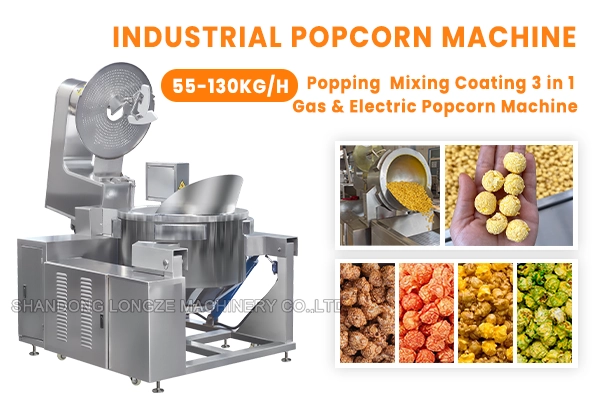
Most chikki enquiries start the same way. A buyer sends a photo of a finished bar and asks for a complete line from sugar to sealed pouch.
We build one part of that line: the planetary cooking mixer that cooks the sugar/syrup to stage and folds in the nuts. This article explains how to choose that cooking mixer, and states plainly where our supply ends.
WHAT WE BUILD AND WHAT WE DO NOT
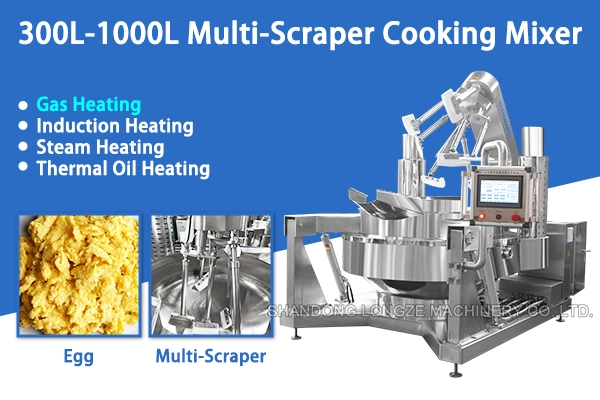
We manufacture the cooking mixer machine. One machine does two jobs — it heats jaggery or sugar syrup to the hard-crack stage, then folds roasted peanuts or other inclusions into the mass at low speed.
We do not manufacture cutting machines or packing equipment. Those are separate machines, usually built by specialists in each step.
We say this first because it saves time on both sides. If you need a turnkey plant from syrup to sealed pouch, we are not that supplier. If you need the cooking step and already have the downstream equipment — or are sourcing it separately — this is what we do.
THE HARD-CRACK STAGE IS WHERE MOST BATCHES FAIL
Chikki sets because the syrup is cooked past the point where it stays soft. That window sits roughly between 150 °C and 160 °C, depending on the recipe, the sugar base and the altitude of the plant.
Below the window, the finished chikki is chewy and bends instead of snapping. Above it, sugar darkens and turns bitter, and the batch is lost.
Jaggery is harder to hold in that window than white sugar. It carries moisture, minerals and impurities that scorch before the syrup itself does, and the hottest point of a directly fired vessel is exactly where material would otherwise sit still. That is why the scraper has to keep the bottom clear — not just stir the middle.
HEATING METHODS: MATCH YOUR SITE, NOT A RANKING
There is no universal best heating method. There is only the method that fits the fuel, utilities and process temperature you actually have on site.
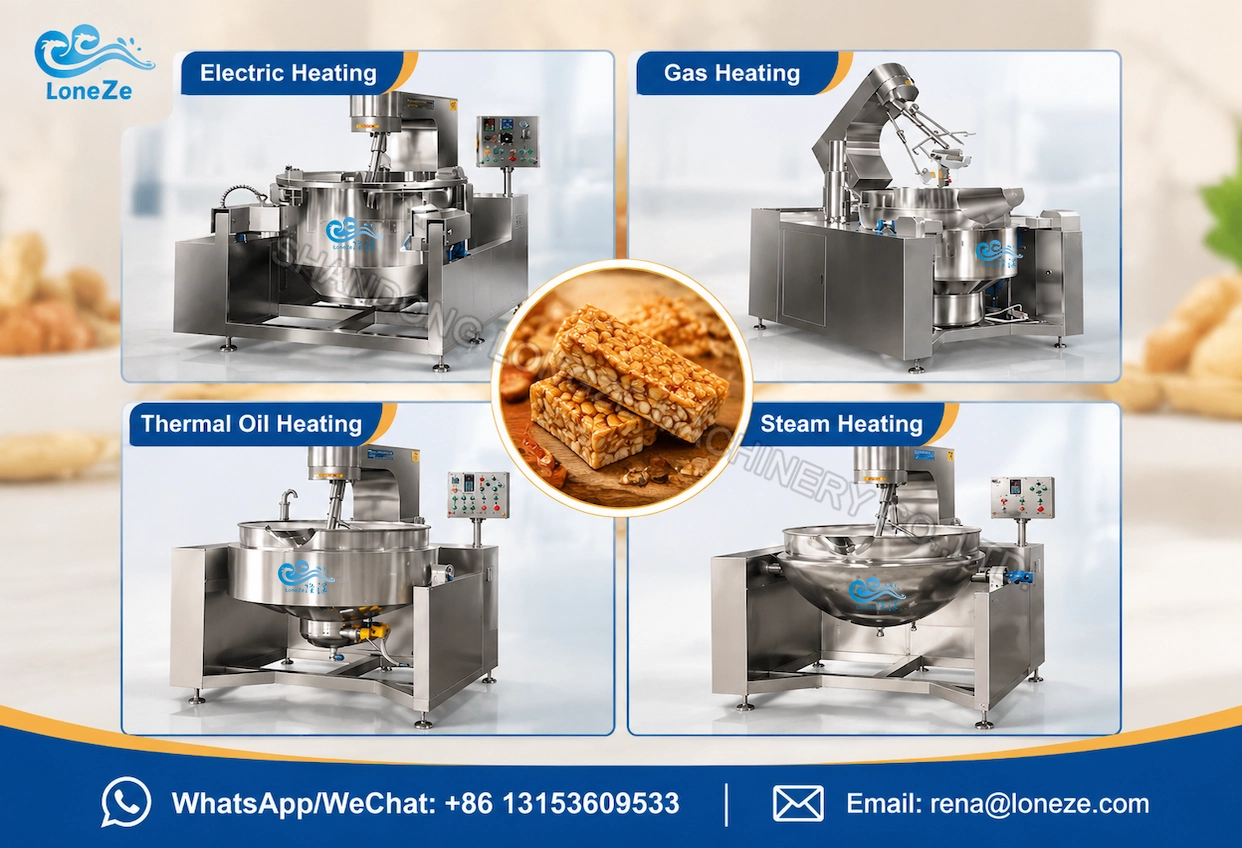
Gas or LPG direct-fired. Fast ramp-up, high temperature capability, adjustable firepower. Confirm gas availability, supply pressure, ventilation and flame detection arrangement.
Electric induction,requiring industrial three phases power. No open flame, digitally controlled, repeatable recipe settings. Confirm electrical capacity, voltage and frequency.
Thermal oil, electric or gas. High temperature without pressure, stable once hot, slower to ramp up.
Steam jacket. Good for pre-melting jaggery and holding syrup between batches. Saturated steam at 3 bar sits around 132.87 °C, which leaves little margin at the hard-crack stage. If your syrup must be cooked at the upper end of the range, evaluate gas, induction or thermal oil instead.
A common arrangement is steam or thermal oil for pre-melting and holding, with a gas or induction vessel for the cooking and folding step. That separates the slow step from the temperature-critical one.
CAPACITY: Pot DIAMETER, VOLUME AND STIRRING POWER
| Pot diameter | Loading capacity | Standard stirring power |
| 700 mm | 100 L | 1.5 kW |
| 800 mm | 150 L | 1.5 kW |
| 900 mm | 200 L | 2.2 kW |
| 1000 mm | 300 L | 2.2 kW |
| 1100 mm | 400 L | 2.2 kW |
| 1200 mm | 500 -600 L | 2.2 kW |
A 50 L model is available for electric induction heating only.
For heavily loaded or extra-viscous batches, a higher level kW stirring motor can be specified. These are custom options, not standard values.
Different kinds of materials have different bulk density,so please feel free to tell me your product and target batch cooking capacity .I will recommend the most suitable model for you.
THREE OPTIONS WORTH SETTLING BEFORE YOU ORDER
Temperature measurement and control. The hard-crack stage is the parameter that decides whether the batch is sellable. Measuring it beats judging it by eye.
Automatic weighing. Repeatability comes from the syrup-to-inclusion ratio, not from how long the operator has been doing this.
High-pressure water tap. Jaggery residue hardens fast. A vessel you cannot flush while it is still hot costs changeover time every single day.
Other options — metering pump, oil filling pipe, water pipe, and button, PLC touch-screen, remote or integrated control — are selected per project.
FITTING THE Cooking Mixer Machine TO EQUIPMENT YOU ALREADY HAVE
The most common integration problem is discharge height. Chikki stiffens quickly once the inclusions go in, so the vessel has to empty onto your sheeting table well before the mass stops flowing.
Before ordering, measure the height and position of your existing sheeting table, and confirm which side the vessel will discharge from. If you are still choosing the downstream equipment, send us the discharge arrangement first. Matching a table to a pot is much cheaper than modifying a pot later.
WHAT TO SEND US BEFORE A QUOTATION
Which chikki varieties you produce, and which one is your volume product
Syrup base — jaggery, sugar or a blend — and the syrup-to-inclusion ratio by weight
Inclusion type and size: whole, split or crushed
Target batch weight and output per shift
Available heating on site: natrual gas or LPG gas,steam generator or boiler,three phases power,please tell us the avaliable one for you
Discharge height required by your sheeting table
A trial batch is the only reliable way to confirm cycle time and finished output. We documented one end to end: a ten-minute batch on a gas cooking mixer.
Send us your recipe and we will tell you which configuration fits it — or tell you whether our cooking mixer is suitable for your product or not.