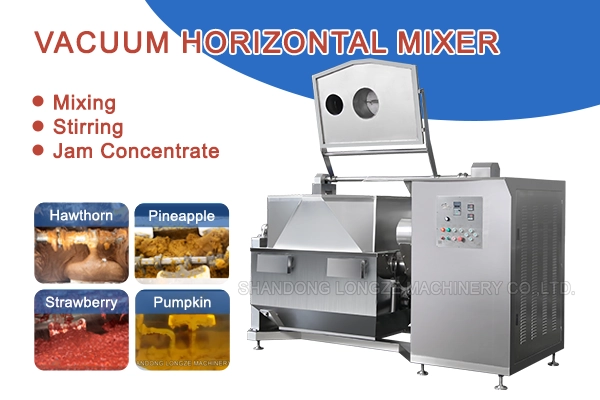
What Is an Industrial Vacuum Horizontal Cooking Mixer?
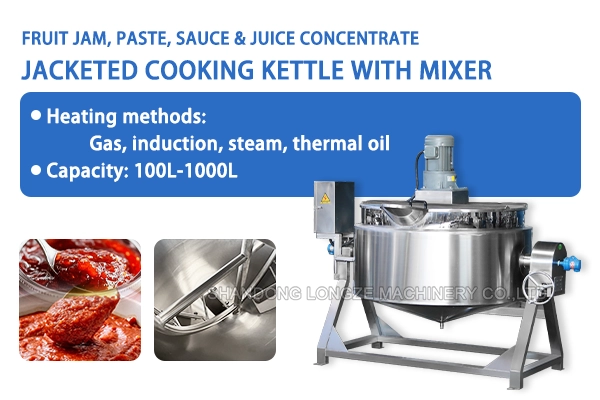
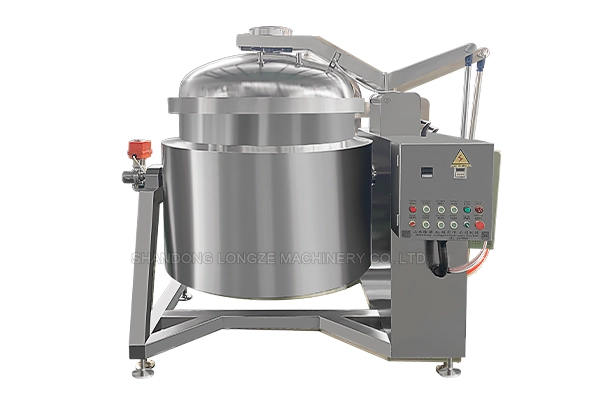
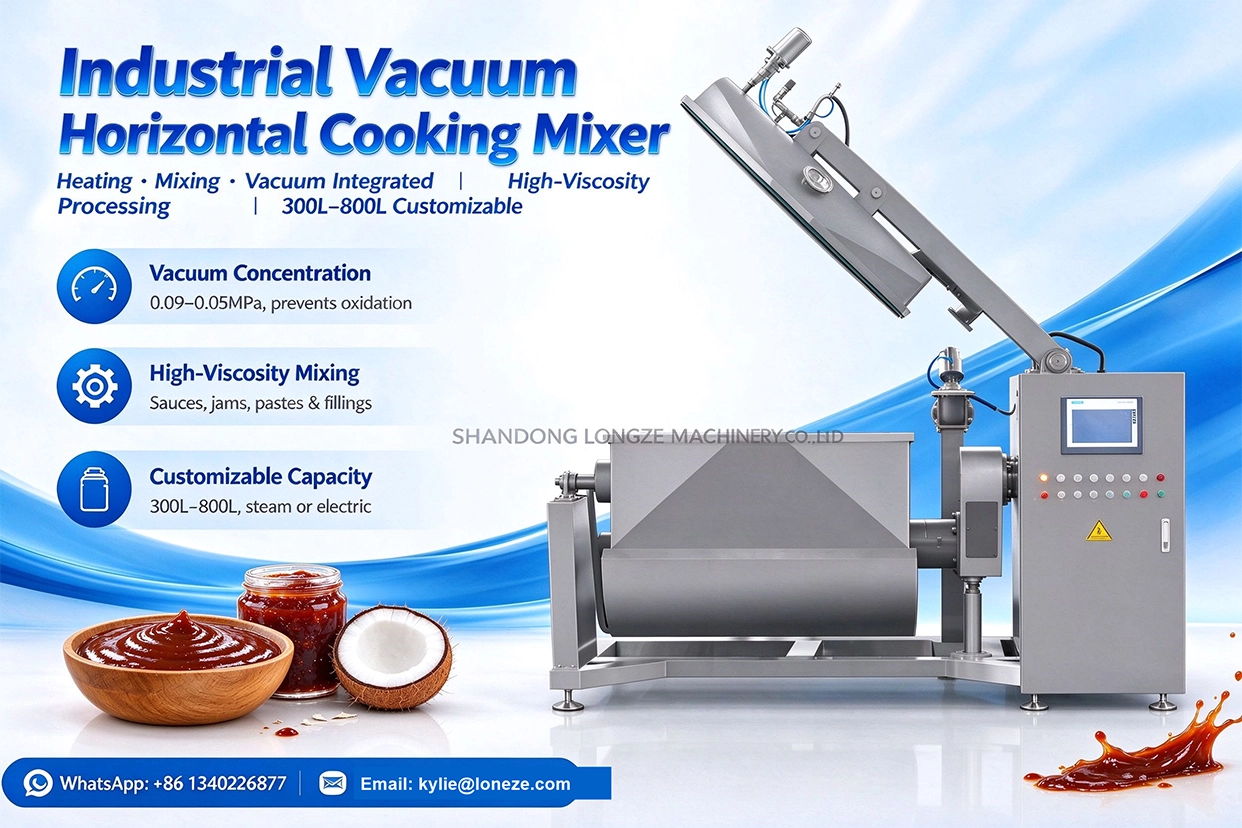
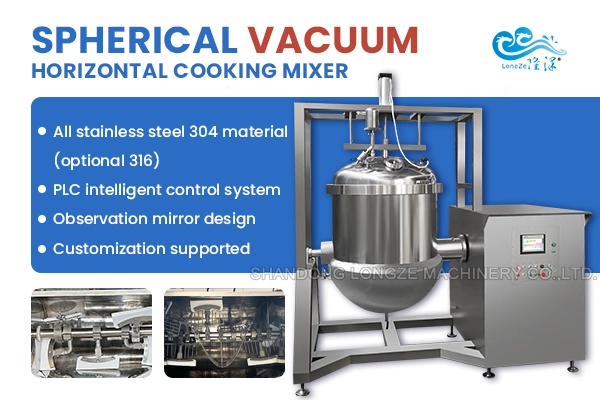
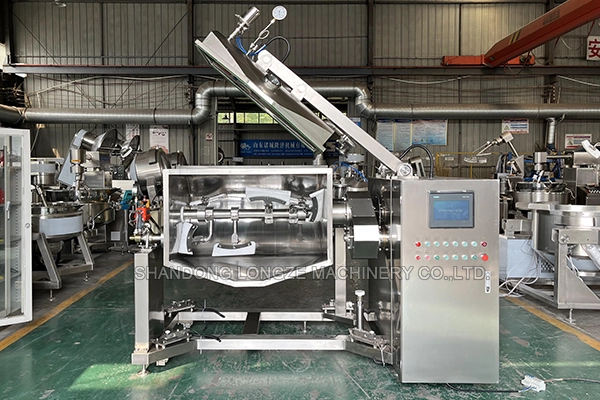
An industrial vacuum horizontal cooking mixer is a food processing machine designed to heat and mix materials inside a horizontal processing chamber under controlled operating conditions.
Unlike a conventional open cooking kettle, this type of equipment can integrate vacuum processing into the production cycle. When the machine is appropriately configured for concentration, vacuum operation can help remove moisture while the mixing system keeps the product moving.
The horizontal mixing structure is particularly useful for thick, sticky, or concentrated materials that are difficult to process using conventional stirring equipment.
Depending on the product and process, the machine can support applications such as:
- Fruit jam and fruit paste processing
- Thick sauce and seasoning paste preparation
- Food filling and confectionery processing
- Coconut juice and selected beverage concentration applications
- Concentrated fruit products and other specialty food ingredients
The appropriate configuration depends on the material’s viscosity, heat sensitivity, solids content, target concentration, and required batch output.
How Does a Vacuum Horizontal Cooking Mixer Work?
The processing procedure varies according to the product, but a typical batch operation involves the following stages.
1. Raw Material Loading
The operator loads the raw material into the horizontal mixing chamber according to the production requirements.
Depending on the application, the ingredients may include fruit juice, coconut liquid, fruit puree, sugar solutions, sauces, pastes, or other food ingredients.
2. Controlled Heating
The heating system raises the material to the required processing temperature.
Heating conditions should be selected according to the product’s characteristics, desired processing time, and final quality requirements.
3. Continuous Mixing
The internal mixing mechanism keeps the material moving during processing.
For thick food products, appropriate mixing helps distribute ingredients and reduce material accumulation. For concentration applications, mixing can help maintain product uniformity throughout the batch.
4. Vacuum Processing and Concentration
When vacuum processing is required, the system reduces the pressure inside the processing chamber.
Under reduced pressure, a liquid can boil at a lower temperature than it would under atmospheric pressure. With suitable heating and vapor-handling components, this principle can be used to remove moisture and concentrate selected food products.
Vacuum processing may also help reduce air incorporation and unnecessary exposure to the surrounding atmosphere.
The actual operating temperature, evaporation rate, and achievable concentration depend on the raw material and the machine configuration.
5. Final Processing and Discharge
After the required mixing, cooking, or concentration process is completed, the product is discharged for subsequent processing.
By integrating several processing functions in one machine, manufacturers may simplify batch handling and reduce transfers between separate vessels.
Applications of Industrial Vacuum Horizontal Cooking Mixers
One of the advantages of this equipment is its potential to serve different food processing applications when the machine is correctly configured.
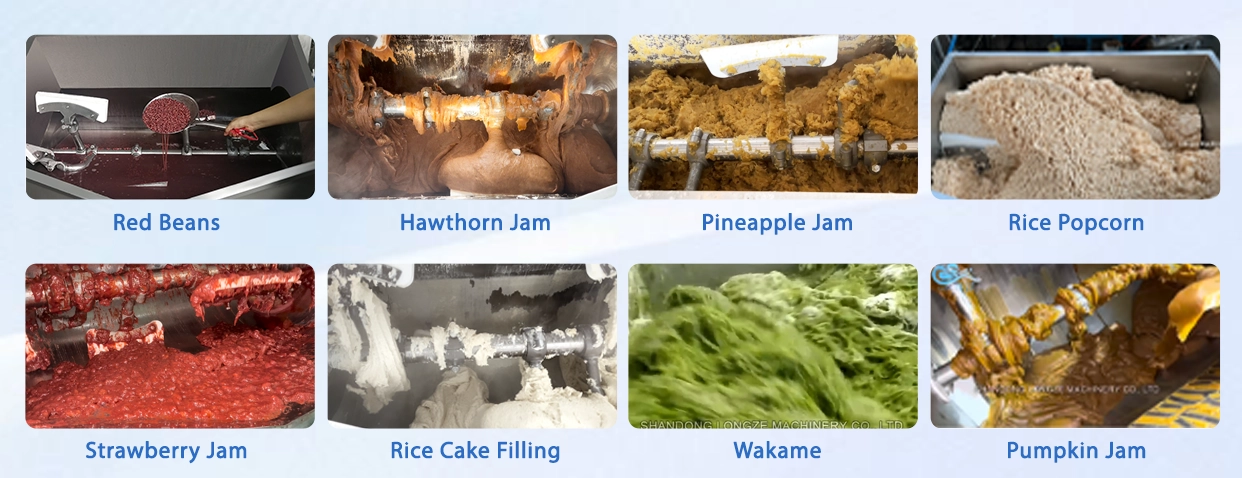
1. High-Viscosity Food Processing
High-viscosity food materials are often difficult to mix and heat evenly.
Products such as fruit paste, bean paste, thick seasoning sauces, concentrated fillings, and confectionery ingredients may require continuous mechanical mixing during heating.
An appropriately designed horizontal mixer can help keep these materials moving and support more consistent batch processing.
For manufacturers dealing with sticky or dense food materials, selecting a suitable mixing mechanism is important for product quality and production efficiency.
2. Fruit Juice and Fruit Product Concentration
Fruit processing manufacturers may need to reduce moisture content or increase the concentration of selected fruit-based products.
Depending on the product properties and required processing conditions, vacuum processing can be considered for certain fruit juices, fruit preparations, and concentrated fruit ingredients.
Suitable equipment selection should take into account the product’s viscosity, pulp and fiber content, foaming behavior, and sensitivity to heat.
For products containing substantial pulp or suspended solids, the mixing system and vapor-handling arrangement must be selected carefully to support stable operation.
3. Fruit Jam and Fruit Paste Production
Fruit jam and fruit paste production frequently require heating, mixing, and moisture reduction.
As the product becomes more concentrated, its viscosity may increase, making material movement and heat transfer more challenging.
An industrial vacuum horizontal mixer can be configured to support batch processing of suitable jam and paste products while maintaining controlled mixing conditions.
This application is particularly relevant to manufacturers producing fruit fillings, thick fruit preparations, and concentrated fruit ingredients.
4. Sauce and Seasoning Paste Processing
Thick sauces and seasoning pastes often contain multiple ingredients that must be distributed evenly throughout a batch.
Examples include chili sauce, concentrated tomato products, curry-based sauces, and other specialty food preparations.
The mixing system, heating method, and processing sequence should be selected according to the recipe and required texture.
For suitable formulations, vacuum processing can also help control air incorporation during mixing.
For more guidance on equipment selection, read our guide to choosing an industrial cooking mixer for sauces and fillings.
5. Food Fillings and Confectionery Materials
Bakery fillings, sweet bean paste, caramel-based ingredients, and other confectionery materials may become highly viscous during heating.
A properly configured horizontal cooking mixer can help manufacturers process these products through controlled heating and continuous mixing.
For sticky or dense materials, the mixing configuration and discharge arrangement should be evaluated before finalizing the equipment specification.
Key Benefits of Vacuum Horizontal Cooking Mixers
Combined Heating, Mixing, and Vacuum Processing
Integrating multiple processing functions into one system can simplify the production workflow and reduce unnecessary product transfers.
This is useful for manufacturers who need controlled batch processing rather than several independent processing vessels.
Controlled Processing Conditions
Food products vary in viscosity, moisture content, and sensitivity to heat.
A suitable vacuum horizontal mixer allows the processing system to be configured around the requirements of the actual product.
For vacuum concentration, pressure, temperature, and evaporation conditions must be coordinated to achieve the intended result.
Suitable for Diverse Food Applications
With the appropriate configuration, the equipment can be considered for both thick food materials and selected batch concentration processes.
This gives manufacturers flexibility when developing different recipes or processing specialty ingredients.
Food-Grade Construction
Stainless steel construction is widely used in industrial food processing equipment.
The material grade, internal finish, seals, cleaning arrangements, and other product-contact components should be confirmed according to the customer’s hygiene requirements and the characteristics of the material being processed.
Technical Configuration of Longze Vacuum Horizontal Mixers
| Feature | Specification | Benefit |
| Vacuum Level | Adjustable 0.09~0.05MPa | Prevents oxidation & flavor loss |
| Mixing Capacity | 300L/400L/500L/600L/700L/800L Customizable | Scale from pilot tests to full production |
| Temperature Control | 40℃-70℃ | Heating, Mixing and Vacuum |
| Motor power | 3-7.5kw | Different capacities require different motor specifications |
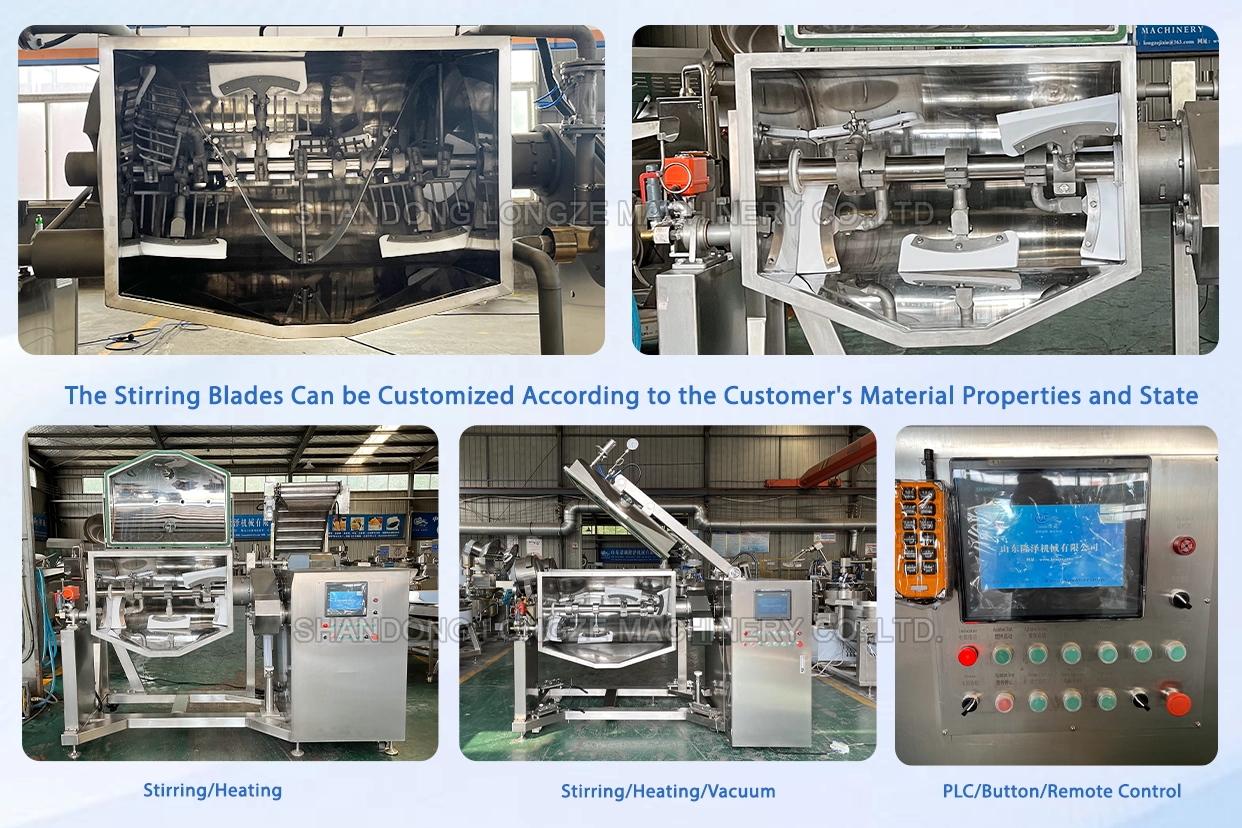
| Stirring Speed | 0-80r/min | The stirring speed can be adjusted according to the material properties and state |
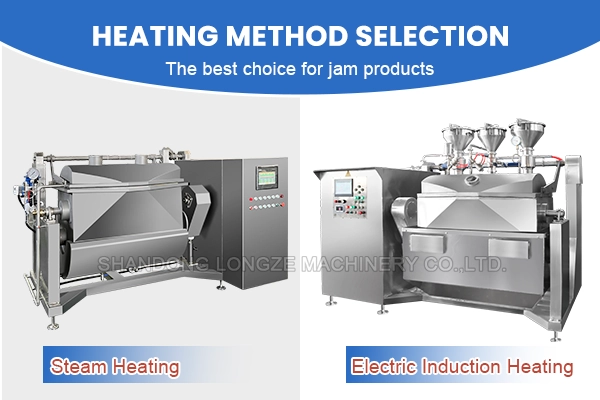
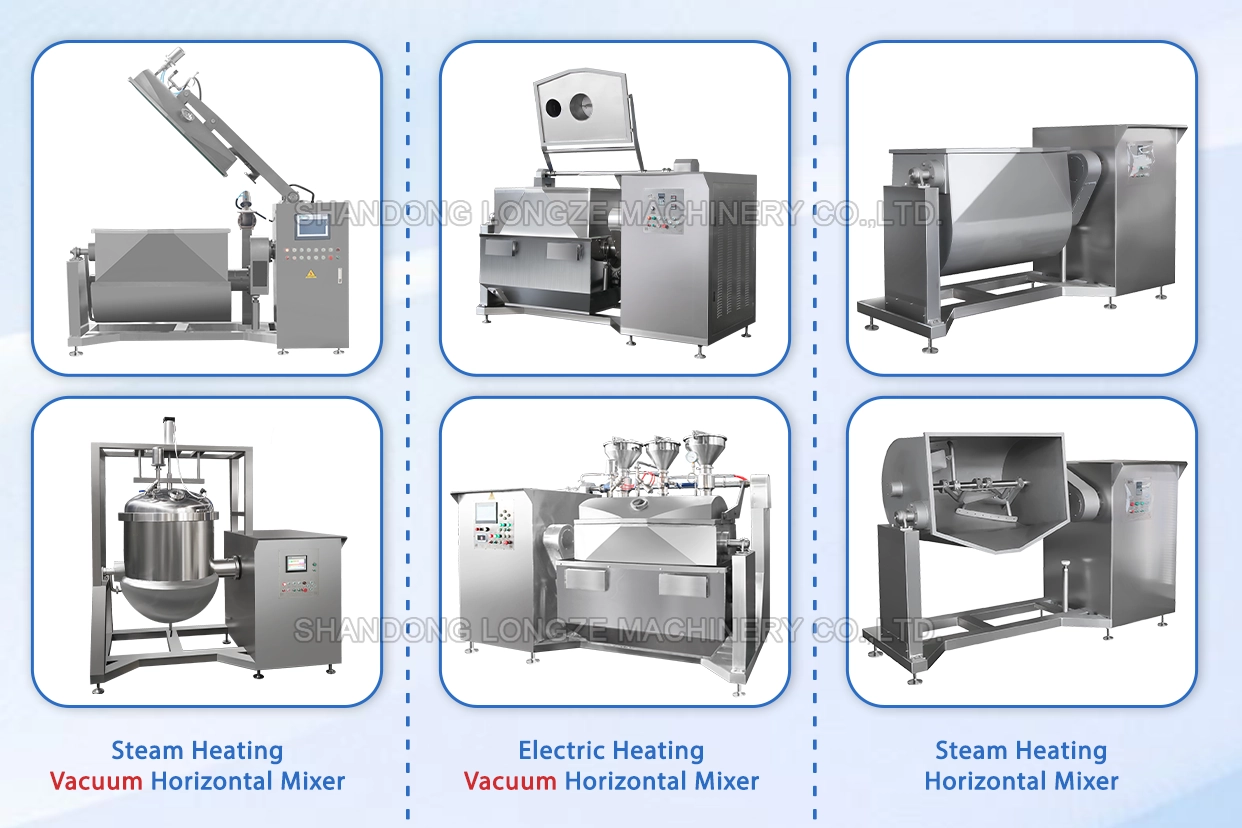
| Heating Type | Steam/Electric induction | There are two heating modes to choose from |
| Functions | Stirring/Heating/Vacuum | Can be customized according to material properties |
Why Choose Longze Machinery?
Shandong Longze Machinery specializes in industrial food processing equipment and customized cooking and mixing solutions.
Different food products require different processing conditions. Selecting equipment according to the actual recipe and production targets is therefore more reliable than choosing a machine based on vessel capacity alone.
Longze can discuss processing requirements with customers and recommend a suitable configuration based on product characteristics, batch size, heating method, mixing requirements, and automation needs.
Request a Quote for an Industrial Vacuum Horizontal Cooking Mixer
Looking for an industrial vacuum horizontal mixer for high-viscosity food processing, coconut juice concentration, fruit paste, sauces, or food fillings?
Contact Longze Machinery with the following information:
- Product: What food or beverage material do you want to process?
- Batch size: What volume or weight do you need per batch?
- Target output: How much finished product do you need per hour or per day?
- Processing requirements: What are the target temperature and processing time?
- Concentration requirements: If applicable, what are the initial and target Brix values?
- Material characteristics: Is the product clear, pulpy, thick, sticky, or prone to foaming?
- Utilities: What heating source and electrical supply are available at your factory?
With these details, our team can evaluate the application and discuss a suitable vacuum horizontal cooking mixer configuration.
About Mosentec
Mosentec is a food processing machinery brand under Shandong Longze Machinery Co., Ltd., a professional manufacturer of industrial food processing equipment in China. We specialize in industrial popcorn machines, popcorn production lines, planetary cooking mixers, and customized food processing machinery for food manufacturers worldwide.
With in-house manufacturing and technical capabilities, we provide equipment solutions tailored to different production requirements.